
Tunis
1.250 €
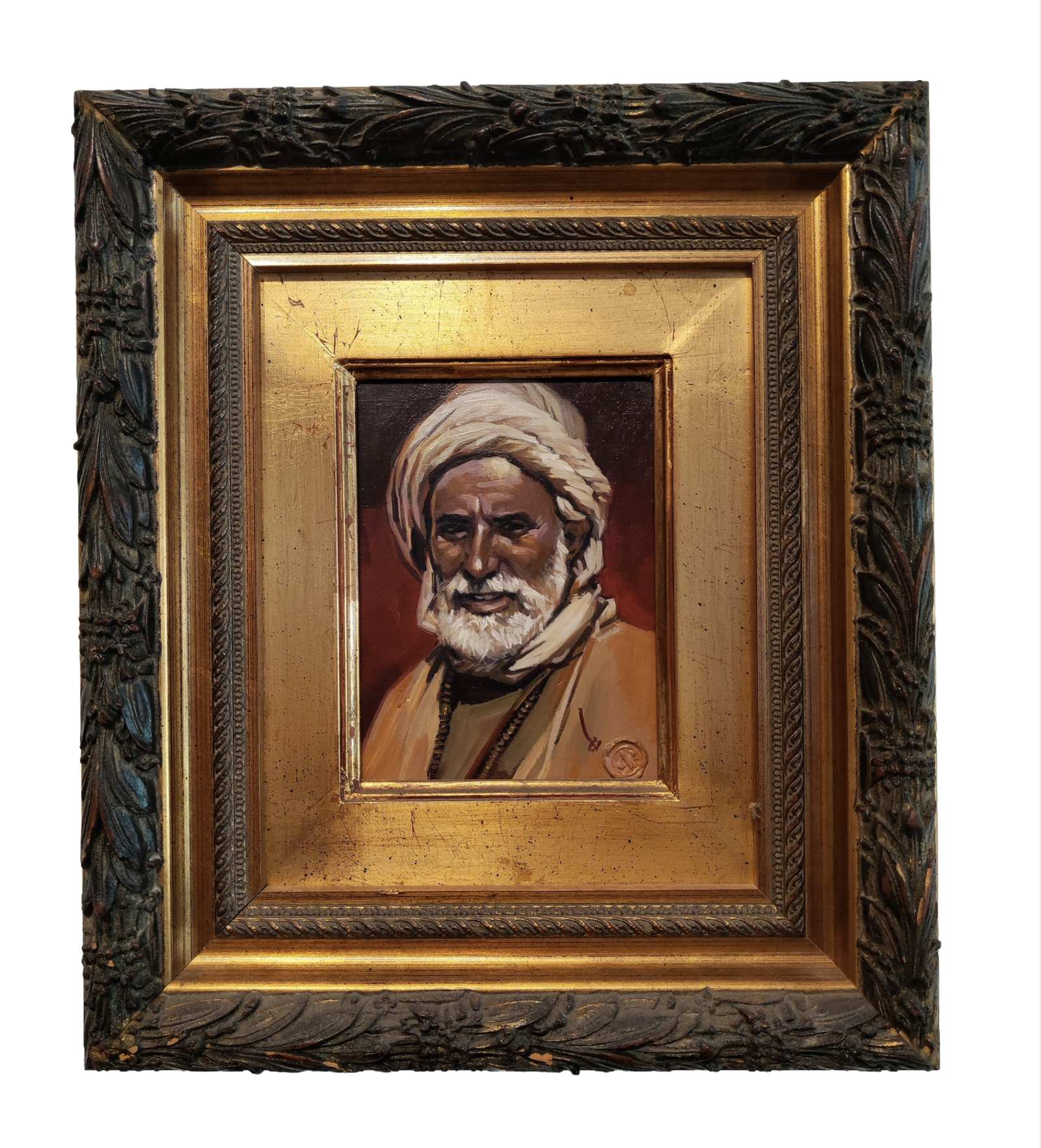
Executed in 1990 by the Catalan painter, draughtsman, and illustrator Albert Pujolar Soler, artistically known as D'Albert (1938), the work titled Tunisia is an expressive and mature bust portrait fully belonging to his acclaimed orientalist period, developed following his travels across North Africa and the Maghreb in the late 20th century. The composition presents an elderly Tunisian man dressed in a light turban and traditional tunic, whose weather-beaten face is captured with striking expressive force and remarkable human dignity. In this piece, D'Albert demonstrates a rigorous technical mastery of academic and hyperrealistic execution, where a neat, detailed brushstroke precisely models the facial anatomy, the texture of the graying beard, and the folds of the garments. The chiaroscuro lighting falls directly upon the sitter's features, accentuating the warmth of his flesh tones and his penetrating gaze against a shadowed background of reddish and ocher hues that intensifies the volume and psychological presence of the figure. Signed by the artist in the lower right corner with a wax seal, the work is framed in a rich, molded golden frame that ennobles the piece, consolidating an aesthetic proposal that aligns with the finest tradition of European figurative orientalism through a contemporary lens of extraordinary artistic and collectible value.
TechniqueOil sobre tabla
Dimensions37x32 cm
Year1990
ArtistPUJOLAR, Albert
PUJOLAR, Albert
Albert Pujolar Soler, artistically known as D'Albert (Barcelona, October 10, 1938), is a prominent Catalan painter, draftsman, and illustrator. He was a self-taught artist. In his youth, he began working as an illustrator and cover designer. He carried out extensive work as a cover illustrator for the famous Bruguera publishing house and newsstand publications in Spain (spanning Western, crime, romance, and science fiction genres), in addition to collaborating with major international publishers such as Warren Publishing and Bastei in Germany and the United States. As an easel painter, he presented his work in galleries across Barcelona and Madrid, as well as venues in Switzerland, France, and the United States. He stood out for his detailed Arab and Orientalist compositions (figures in djellabas, street scenes, architectural details) executed with a hyperrealistic technique of photographic precision, along with his seascapes and Mediterranean coastal scenes. Several of his works have been acquired by collections and institutions such as the Hiroshima Peace Memorial Hall, the Nagasaki City Cultural Hall, the City Council of Naples, and the Hospital de Sant Pau in Barcelona.
Works
More works by this artist
Pieces related to the same artist.