
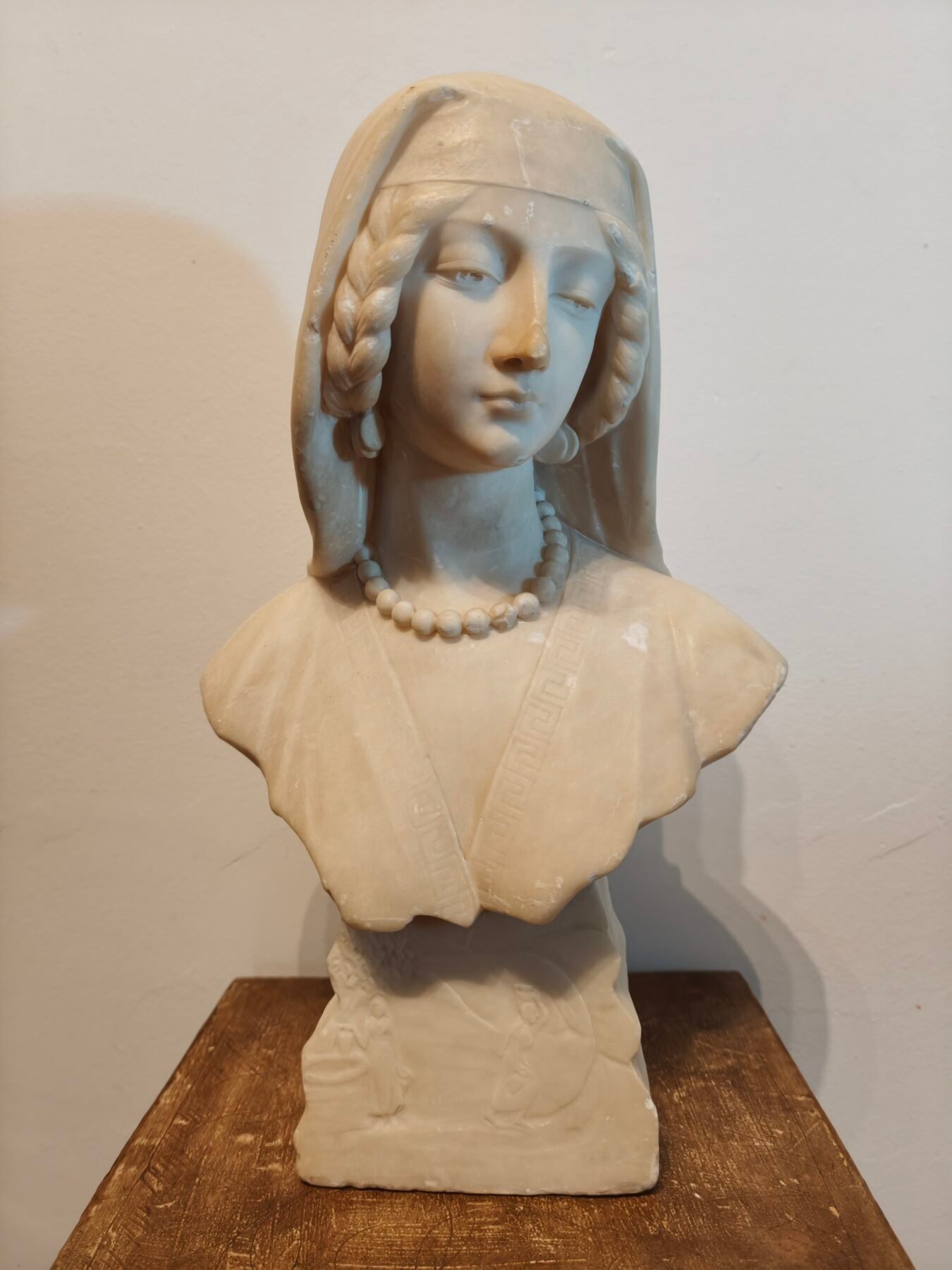
PAGANUCCI, Giovanni
Giovanni Paganucci (Livorno, 1827 - Montevideo, 1889) was a prominent 19th-century Italian sculptor, linked to academicism and the beginnings of sculptural realism in his country. He trained at the Royal Academy of Fine Arts in Florence. During his youth in Florence (around 1855), he shared a studio and forged a deep friendship with key figures of 19th-century Italian painting such as Giovanni Fattori and Giovanni Boldini. Beginning in 1873, he started teaching at the Florentine Academy, an institution where he was appointed resident academician and where he consolidated his professional reputation. In his final years, he traveled to Latin America, settling in Montevideo (Uruguay), where he worked as a teacher at the local academy and passed away in 1889 (some sources place his death in late 1888). His style was characterized by the pursuit of naturalness and expressiveness, gradually moving away from strict classicism to embrace a detailed realism. Among his most notable works are: the sculptures for the facade of the Duomo of Florence: he was one of the first sculptors commissioned to work on the iconic facade of the Florentine cathedral, sculpting the reliefs of the Angels singing glory (circa 1872-1879) on the door jambs; the Statue of Leonardo Fibonacci (1861): located in the Camposanto Monumentale of Pisa; San Tommaso (1882): a statue destined for the Gallery of the Apostles; The Genius of Music: a sculpture located in the gardens of Villa Fabbricotti in Livorno; Busts and portraits: he created numerous commemorative and commissioned busts, such as those dedicated to John Peard, Carlo Poerio, and delicate female marble portraits.
Works