BARROS FERNÁNDEZ, Enrique
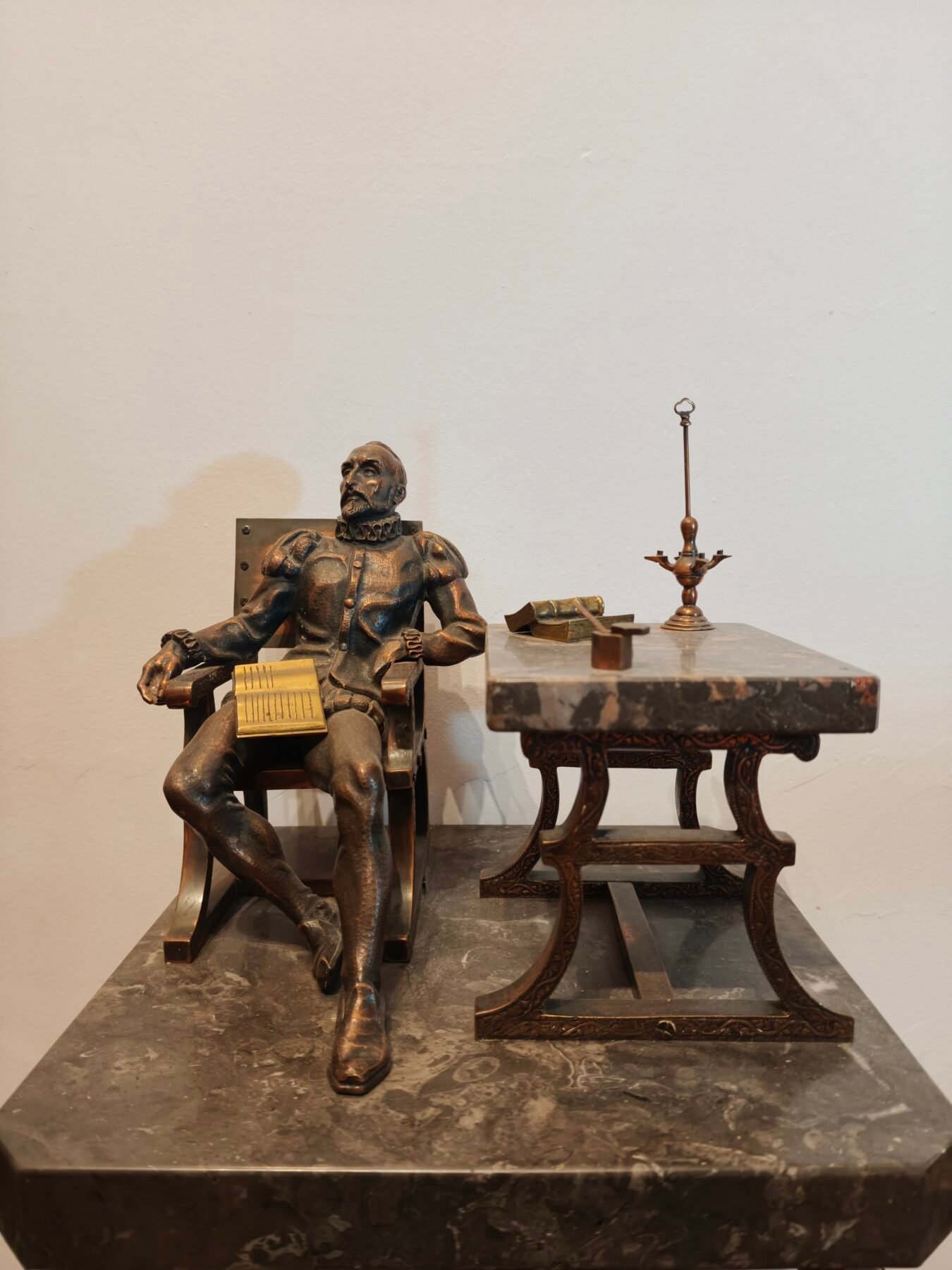
Enrique Barros Fernández (Oímbra, Ourense, July 11, 1905 – Bilbao, 1990) was an outstanding sculptor whose close and decisive relationship with Ourense shaped his origins, despite moving as a child to Bilbao — a city that welcomed him as an adopted son — after being born in Oímbra amidst divergent accounts on whether he left at six months or five years of age. Initially focused on naval studies, and against his family's wishes, he chose art, completing his first year (1923) at the Bilbao School of Arts and Crafts with first prize in modeling and working closely with Higinio Basterra on various monuments. Thanks to a grant awarded in 1928 by the Provincial Council of Ourense, he moved to Paris to complete his training, enrolling in the École Nationale Supérieure des Beaux-Arts and perfecting his technique under master sculptors such as Paul Landowski and Henri Bouchard, alongside studying at the Académie Julian with Antoine Bourdelle and Jean Boucher. In the French capital, he modeled key pieces such as Juventud de Baco, Desnudo Femenino, and Primer amor, an artwork that earned him an honorable mention at the Salon des Artistes Français in 1929. His institutional ties to Ourense led to the acquisition of early works by the Provincial Council — such as Sigfrido, Juventud de Baco, Desnudo Femenino, and creations from his Parisian classes (1928-1929) — alongside significant commissions including the bust of Curros Enríquez at the school on Sáenz Díez Street, the bust of Don José García Barbón (1943) for the Verín City Council, and a second large-format Desnudo Femenino displayed on the staircases of the Provincial Palace. After establishing his international breakthrough in the 1930s with exhibitions across Europe and participating in the 1937 Paris Basque Art Exhibition, he spent the majority of his prolific career in the Basque Country, where he cultivated cabinet modeling, religious imagery, and his emblematic and controversial 1948 commission sculpturing La nueva musa to replace Francisco Durrio's original work on the Juan Crisóstomo de Arriaga monument in Bilbao, with parts of his legacy preserved in private collections, the Bilbao Fine Arts Museum, and the Las Encartaciones Museum, dedicating his final years primarily to painting.
Works