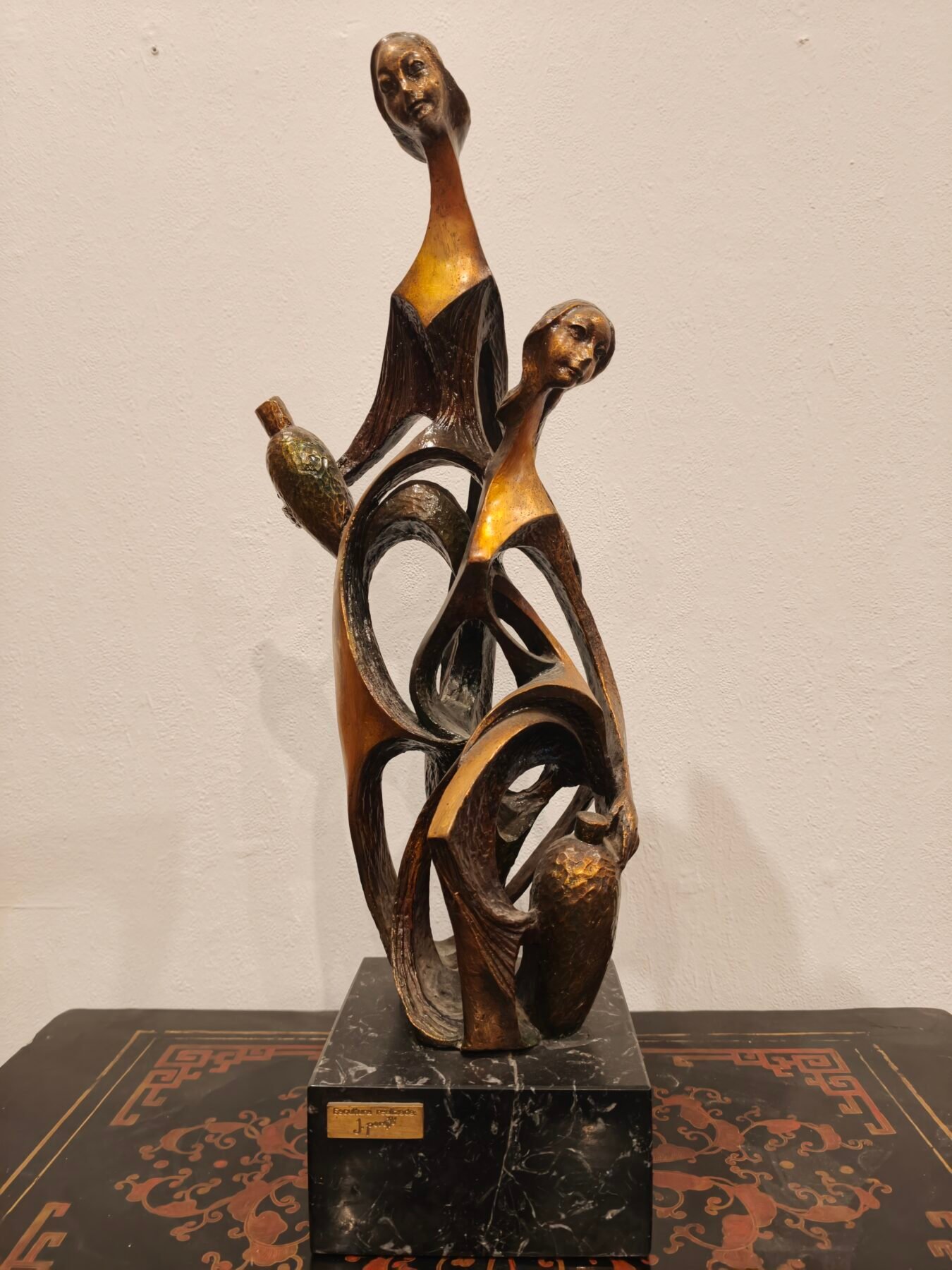
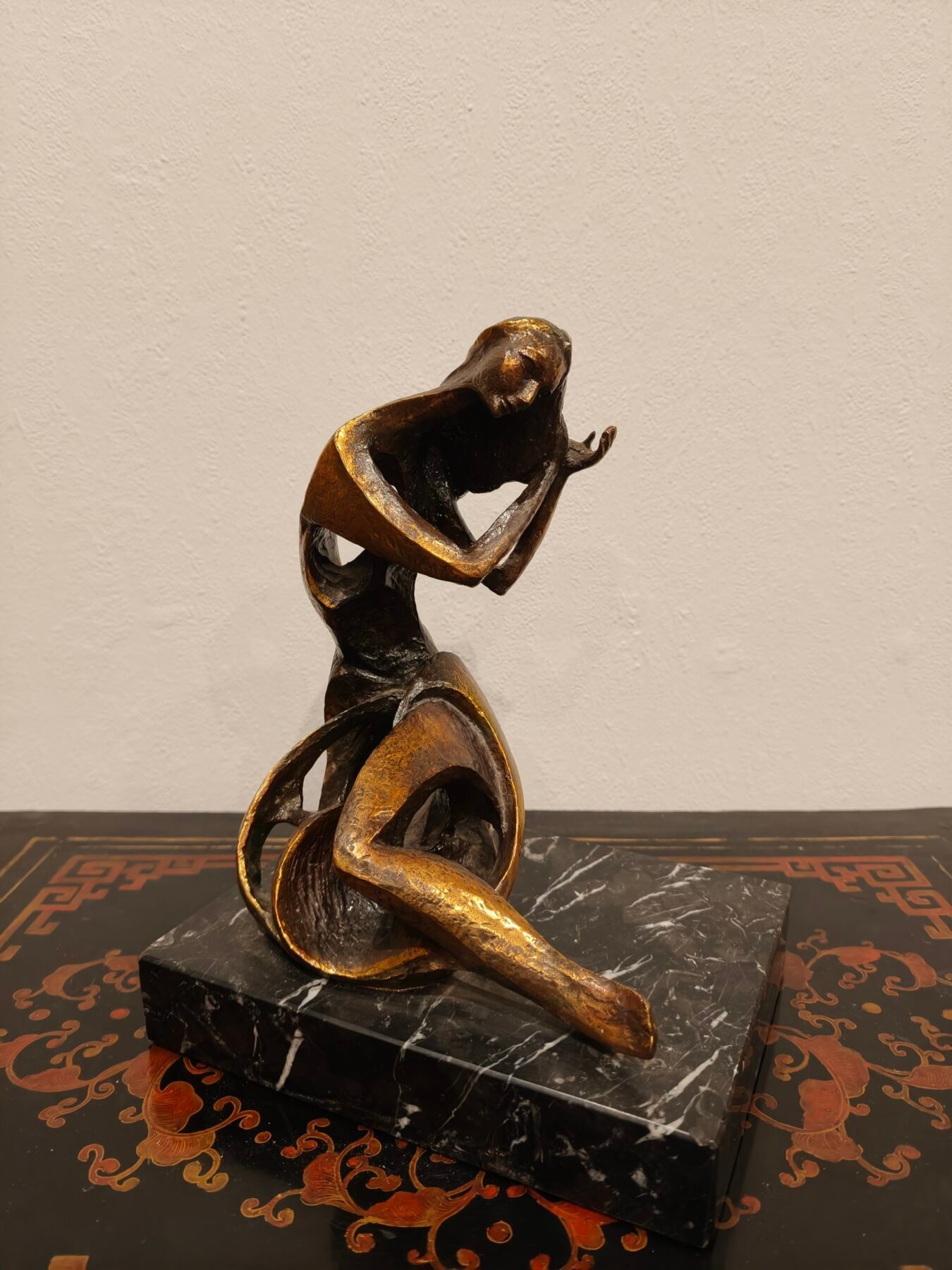
PERELLÓ, Jaume
The sculptor Jaume Perelló i Miró (Torrefarrera, Lleida, 1927 – Bellpuig d’Urgell, Lleida, 2015), named Favorite Son of Torrefarrera and Bellpuig, is one of the most distinguished and international figures in 20th-century Catalan figurative and sacred sculpture, whose self-taught and academic training was forged early on in Lleida and Barcelona under the direct tutelage of renowned masters such as the celebrated sculptor and woodcarver Ramon Borràs and professor Josep Maria Camps i Arnau, mastering clay modeling, wood carving, bronze casting, and stone carving, which led him to found the Lleida School of Fine Arts and embark during the 1950s on an important international career in Italy—where he was jointly chosen by the Spanish and Italian governments to execute the monumental Christ of Bormio, created the celebrated sculpted portrait of Pope Pius XII displayed in the Vatican Museums, and won First Prize for Sacred Art in Milan in 1953, the same year he received First Prize for Relief in Buenos Aires—consolidating a vast sacred and monumental production commissioned for the cathedrals of Lleida and Solsona, the Episcopal Palace of Lleida, and numerous churches throughout Spain, most notably the creation of the "Christ of Love" at the Shrine of El Carmen in Burgos, considered the largest carved wooden Christ in the world at 9 meters in height, in addition to a revered sculpture presented personally to Pope Paul VI for the collections of the Vatican Museum of Modern Art; following his fruitful European period, Perelló established his residence in New York, where his work had a profound impact on the American art market to the point that tycoon Nelson Rockefeller acquired multiple pieces for his private collection, while simultaneously exhibiting his work in galleries and art centers across Europe and the Americas; a chapter of special historical significance in his career was his direct connection to the Expiatory Temple of the Sagrada Família in Barcelona, for which the Construction Board formally offered him the responsibility of sculpting the monumental Passion Façade, a colossal assignment that Perelló respectfully declined due to scheduling commitments, while imparting his mentorship, legacy, and aesthetic vision to eminent workshop collaborators and disciples, chief among them the renowned sculptor Josep Maria Subirachs, who would ultimately undertake the sculptural execution of the Gaudí façade; in order to preserve, catalog, and promote his extensive artistic heritage, the Government of Catalonia established the Perelló Foundation in 1996 in Bellpuig, a museum institution that houses a representative collection of his sculptures, drawings, and famous ceramic murals made using his own unique technique, immortalizing the mark of an exceptional creator whose work resides today in papal collections, institutional holdings, and top-tier international museums.
Works