OLATUNDE, Asiru
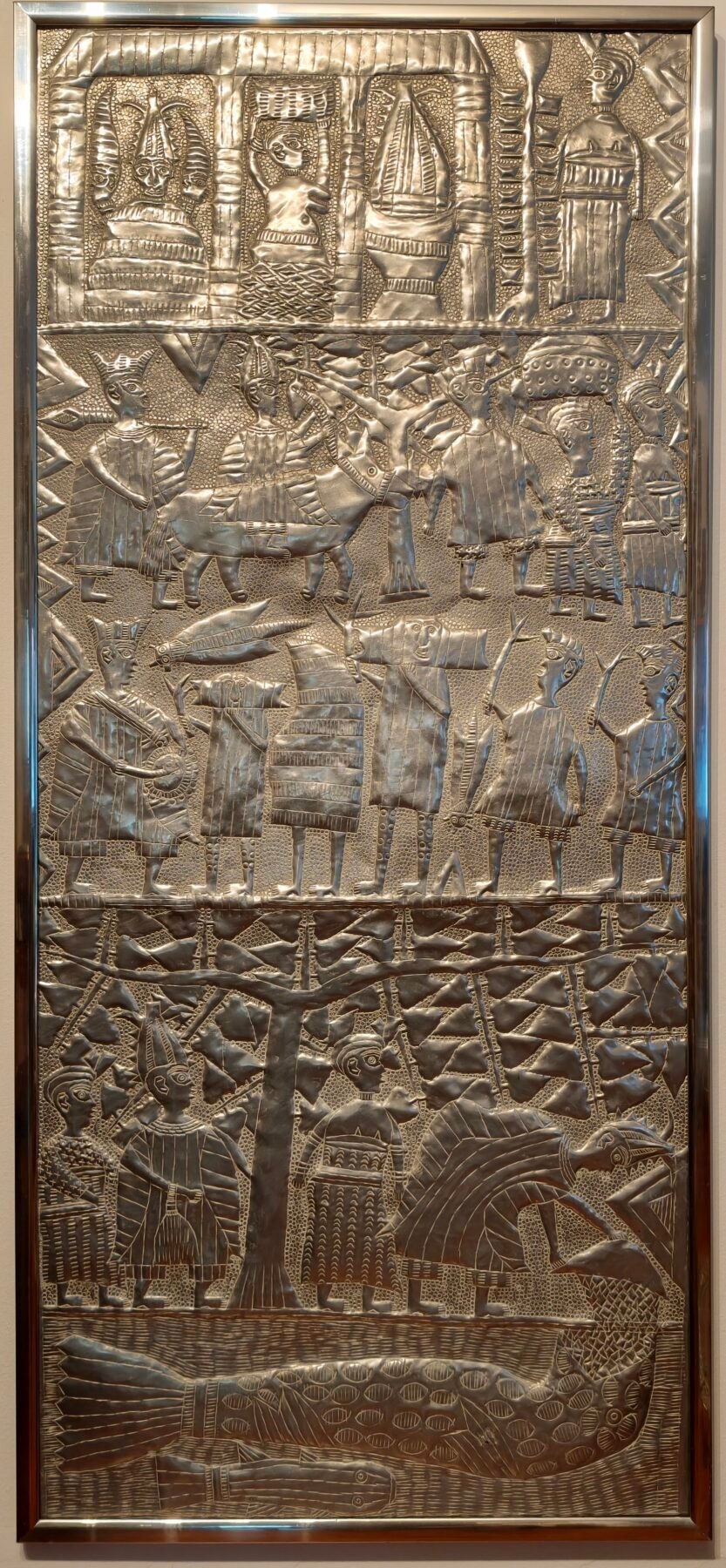
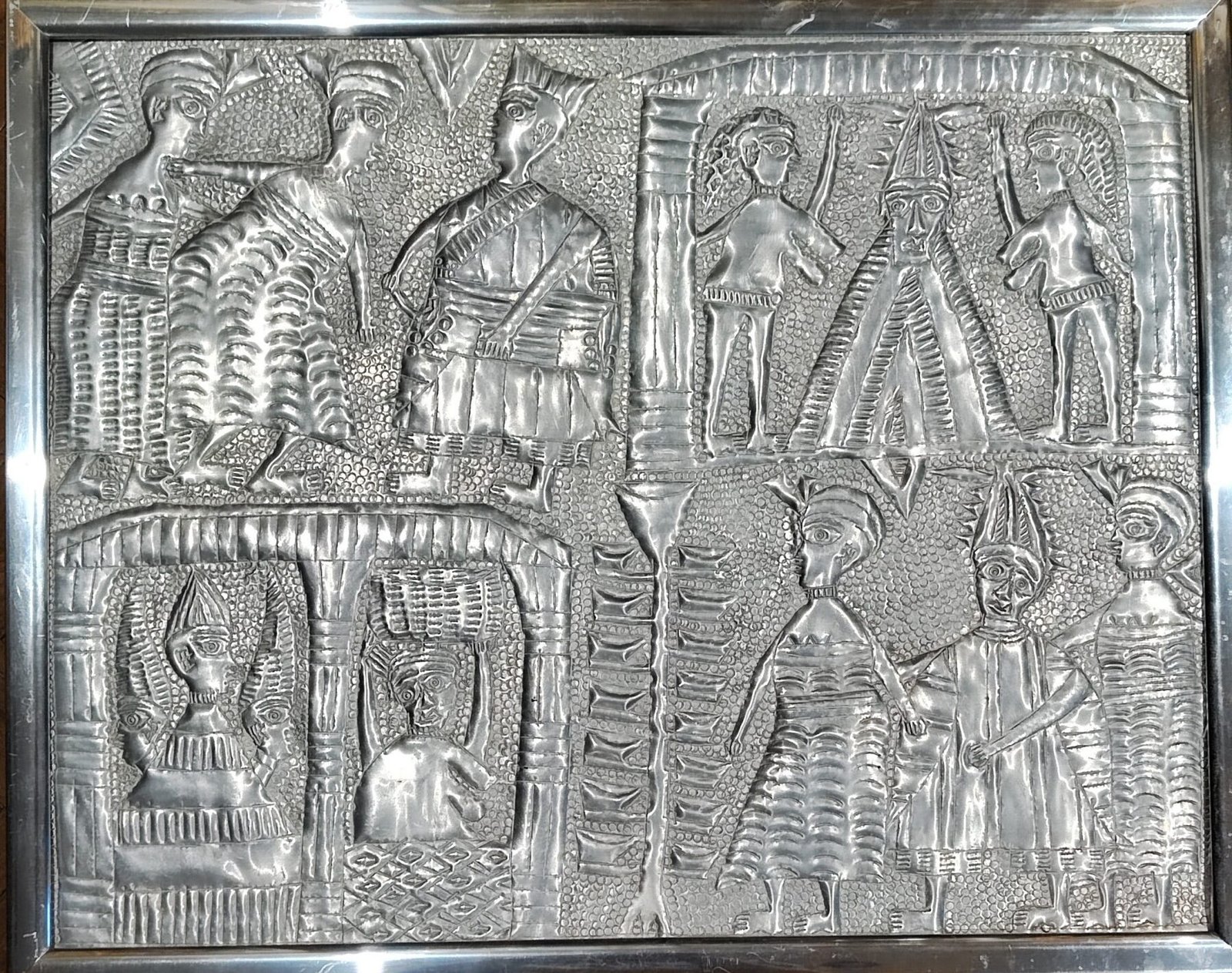
Asiru Olatunde (Osogbo, Nigeria, 1918–1993) was a distinguished sculptor, metalworker, and foundational figure of modern Nigerian art, internationally celebrated as one of the cornerstone artists of the Osogbo Art Movement (Osogbo Art School). Born into a prominent family lineage of Yoruba blacksmiths and metalsmiths, he mastered traditional metallurgy under his father and grandfather while learning the art of the ceremonial talking drum for local rituals. In the late 1950s, a severe illness prevented him from continuing heavy blacksmithing, prompting him to pivot toward delicate jewelry crafting. His artistic talent was discovered in 1961 by cultural patrons Ulli Beier and Susanne Wenger, who encouraged him to expand into monumental sculpture. Olatunde revolutionized African contemporary art as the first artist to adopt hand-hammered repoussé aluminum sheets as his primary plastic medium, originating a signature technique of chiseled textures and punched dot patterns that depicted Yoruba mythological narratives, biblical lore, and everyday genre scenes. Appointed the first president of the Osogbo Artists Association in 1967, his work achieved vast global recognition within high-end collecting circuits. His monumental relief panels were commissioned for prestigious public and civic landmarks, including the King’s Market in Osogbo, St. Peter’s Cathedral in Enugu, and the Central Bank of Nigeria in Lagos, while joining major permanent collections at institutions such as the Smithsonian National Museum of African Art in Washington, D.C., the International Monetary Fund (IMF), the British Museum in London, and the Newark Museum.
Works