
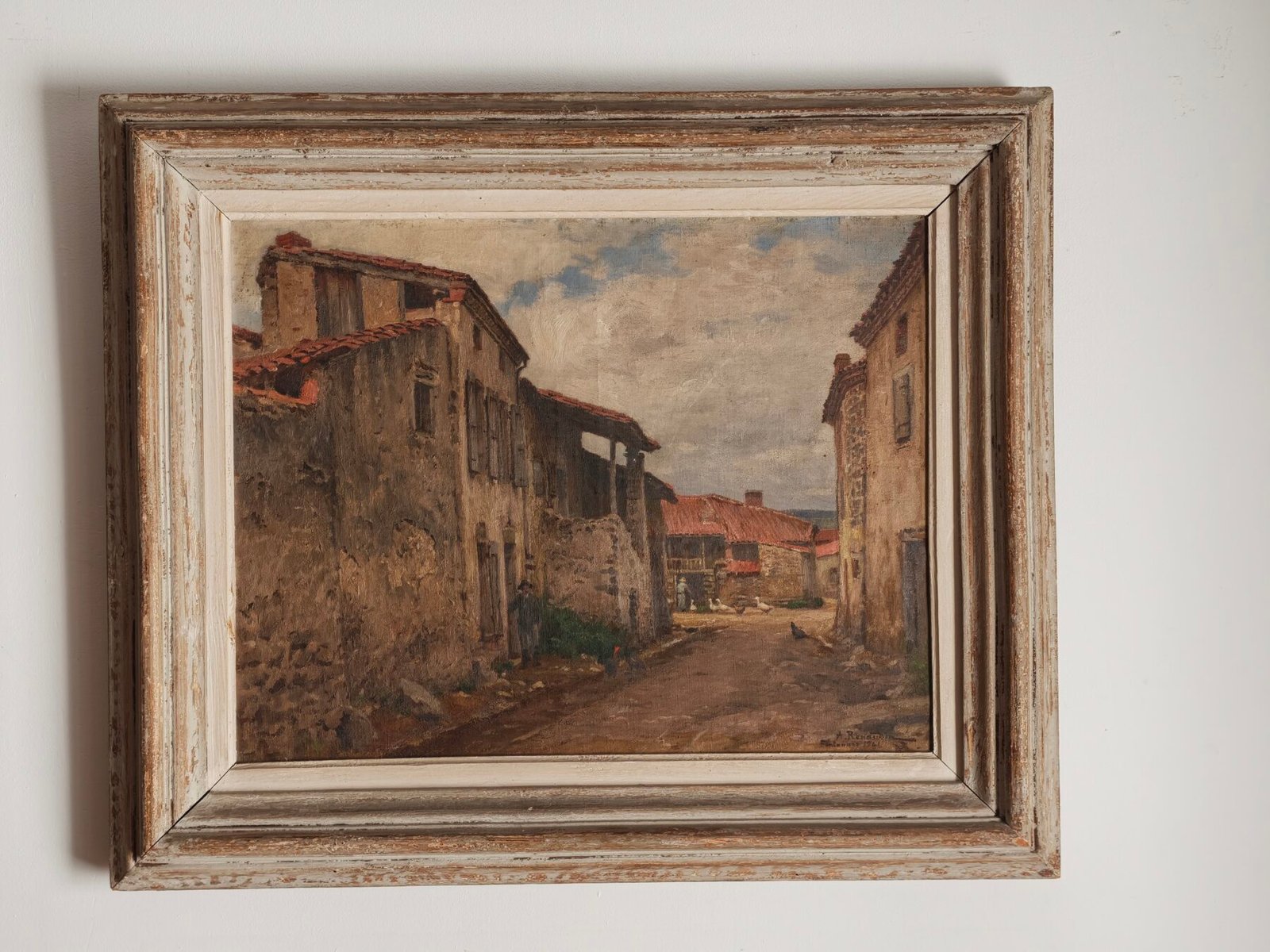
RENAUDIN, Alfred
Alfred Renaudin (1866–1944)—whose name is occasionally erroneously associated with other period masters, yet who stands as one of the most distinguished and unquestionable figures in late 19th and early 20th-century French landscape painting—embodies the pinnacle of atmospheric painting and the realist and impressionist traditions of the celebrated École de Nancy and the Lorraine region. Born on June 3, 1866, in La Neuveville-lès-Raon in the Vosges department, he began his artistic career in 1881 as a decorator and ceramic artist at the prestigious Keller et Guérin Faience Manufactory in Lunéville, where he cultivated a technical precision and an eye for detail that would define his entire oeuvre. His rigorous academic training was consolidated at the École des Beaux-Arts in Nancy under Jules Larcher, later perfecting his technique in Paris as a favored pupil of the monumental landscape painter Henri Harpignies, from whom he inherited a mastery of landscape structure and a poetic approach to natural light. Following his acclaimed debut at the Salon des Artistes Français in 1890, Renaudin established himself as the paramount visual chronicler of Lorraine's valleys, rivers, forests, and villages, renowned for a palette of filtered luminosity and an unmatched skill in capturing morning mists and subtle tonal nuances—a lyrical quality that earned him the celebrated moniker "Monsieur gris subtil" among art connoisseurs. During World War I, his ethical and documentary commitment led him to record with striking painterly mastery the devastation and ruins of key sites such as Gerbéviller and Verdun, leaving behind an iconographic and historical testimony of inestimable heritage value. Despite tragic material losses late in life—when his Nancy studio was severely damaged by World War II bombings and a subsequent fire in Fontannes (Auvergne), where he passed away on November 7, 1944, destroyed a significant portion of his holdings—the reappraisal of his legacy in the French and international art markets has reached institutional heights of undisputed prestige. Today, his masterly oil paintings are preserved and displayed in prominent public institutions and top-tier museums across France, including the Musée de l'École de Nancy, the Musée des Beaux-Arts de Nancy, the Musée de la Cour d'Or in Metz, the Musée Pierre-Noël in Saint-Dié-des-Vosges, the Musée Château de Lunéville, and the Musée barrois in Bar-le-Duc, as well as in prestigious corporate collections and private holdings worldwide, making an authentic canvas by Alfred Renaudin a fine art investment of exquisite refinement, high European market value, and established art-historical importance.
Works