MOGOL, Escuela
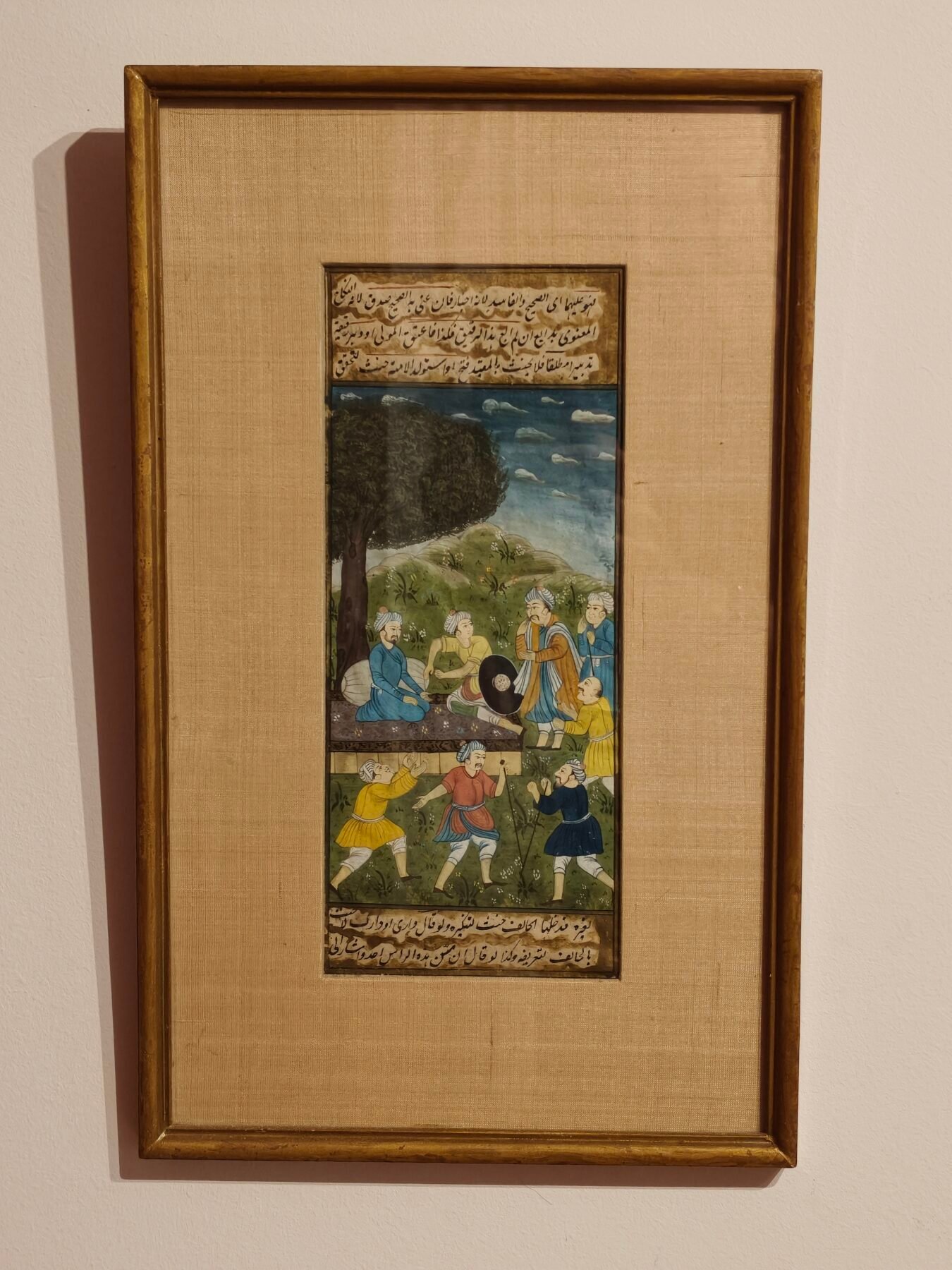
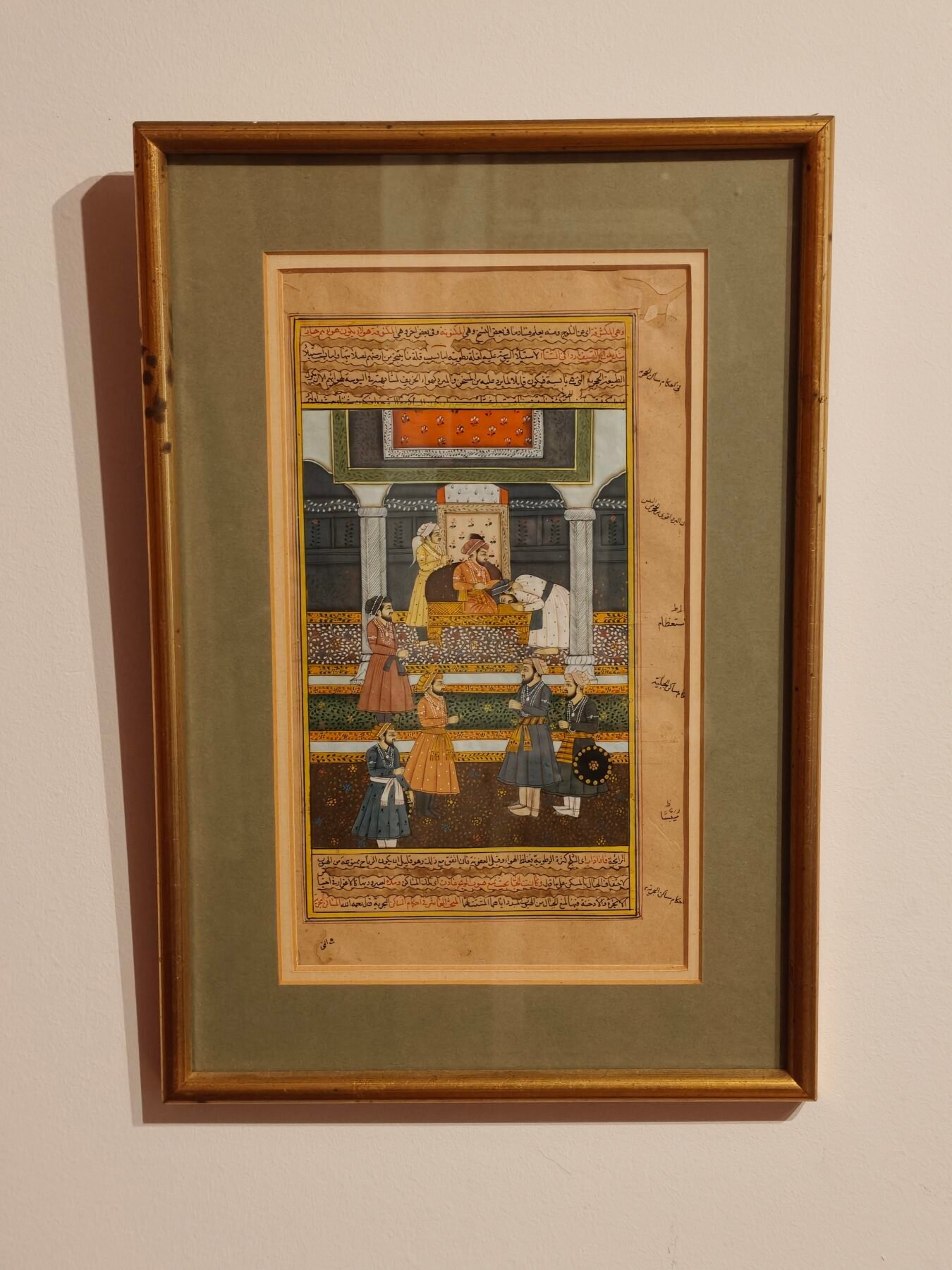
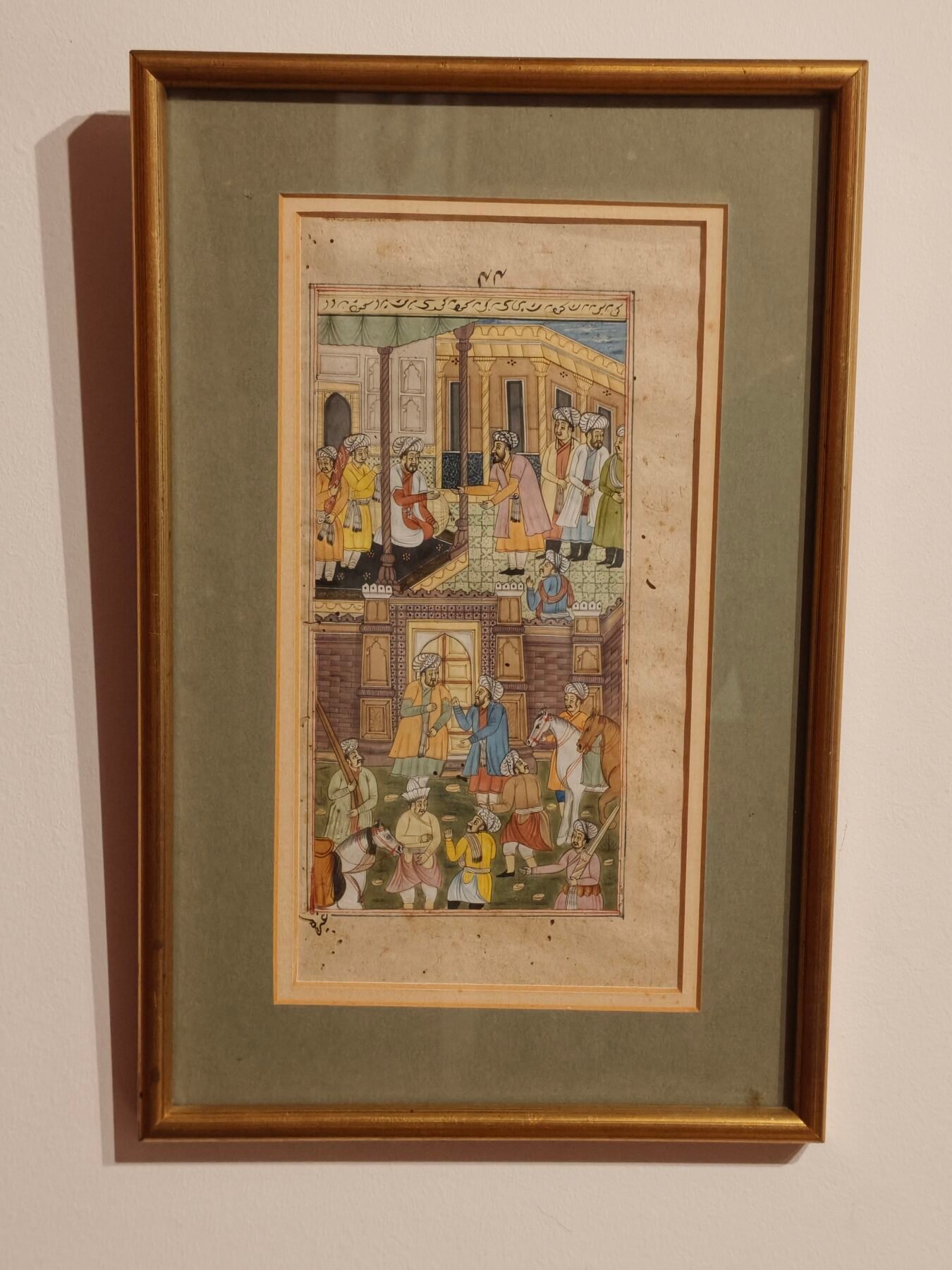
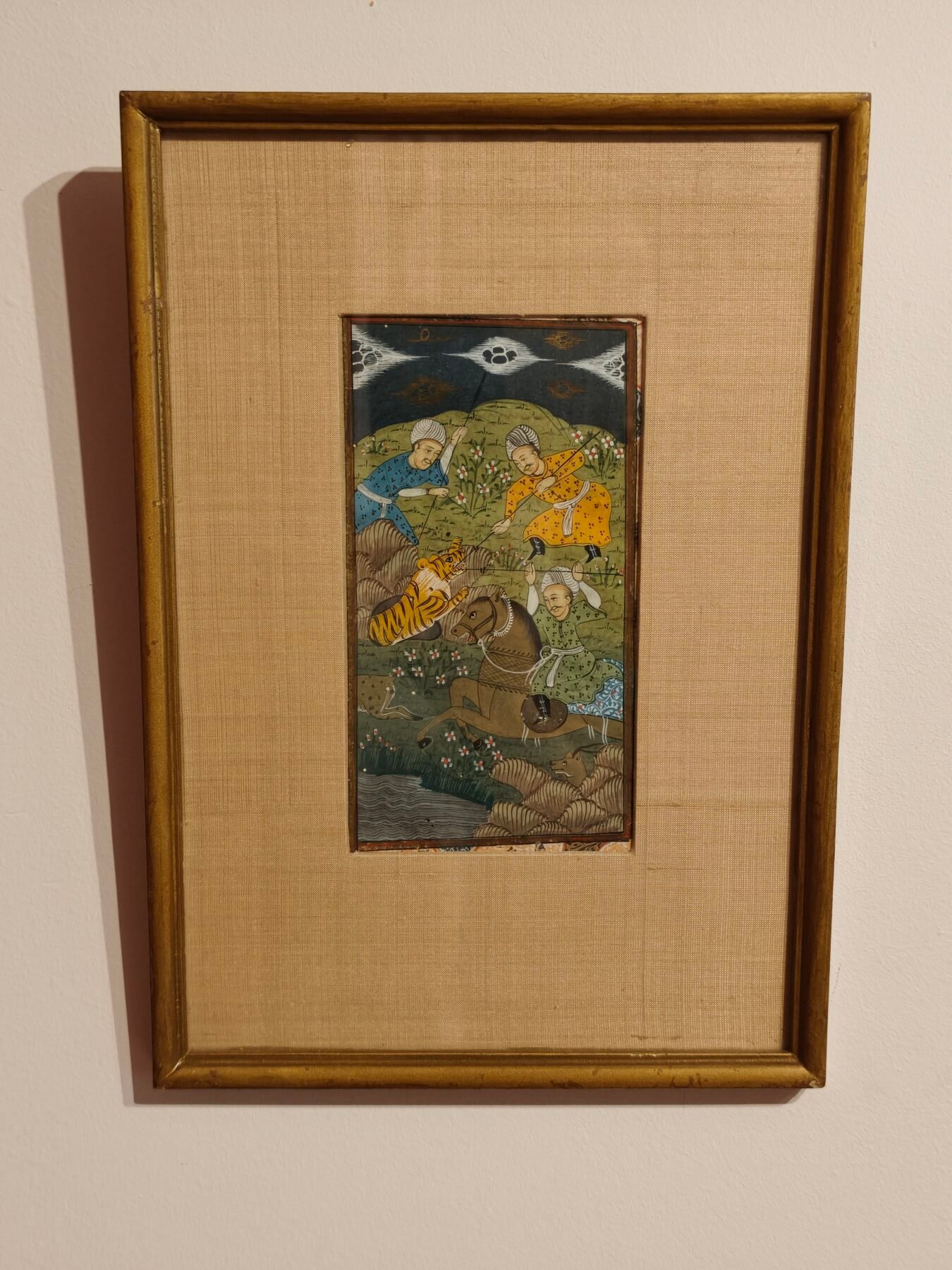
The Mughal school of painting was born in the 16th century under the impetus of Emperor Humayun, who after his exile in Persia returned to India accompanied by Persian master miniaturists such as Mir Sayyid Ali and Abd al-Samad, laying the foundations of a revolutionary pictorial tradition that was masterfully consolidated under the reign of his son Akbar the Great, whose vast imperial workshop (kitabkhana) fused refined Persian lyrical-line aesthetics with the chromatic vitality, realism, and dynamism of indigenous Indian traditions and European Renaissance influences brought through the Jesuits, giving rise to monumental illustrated manuscripts such as the Hamzanama; this imperial golden age flourished even further during the reigns of Jahangir and Shah Jahan, periods in which painting evolved towards exquisite naturalism, unprecedented court psychological portraiture, scientific detail in the representation of flora and fauna, and lavish architectural splendor with palettes of pure inks and burnished gold, until at the end of the 17th century and throughout the 18th century, with the weakening of central power in Delhi, artists migrated to prosperous provincial centers and regional courts where key workshops were born such as that of Awadh (with its vibrant palette and courtly theatricality) and that of Murshidabad (characterized by atmospheric sobriety and geometric rigor), perpetuating the creation of manuscript folios as celebrated as those of the Anvar-i Suhayli, which today absolutely captivate international art collecting and achieve extraordinary prices in major global auction houses such as Sotheby's, Christie's, or Bonhams due to their legendary rarity, technical perfection, and profound historical-cultural value, with their reference collections preserved in the most prestigious museums on the planet such as the British Museum and the Victoria and Albert Museum in London, the Metropolitan Museum of Art in New York, or the Musée Guimet in Paris.
Works