
RANMA-SHI, Escuela de
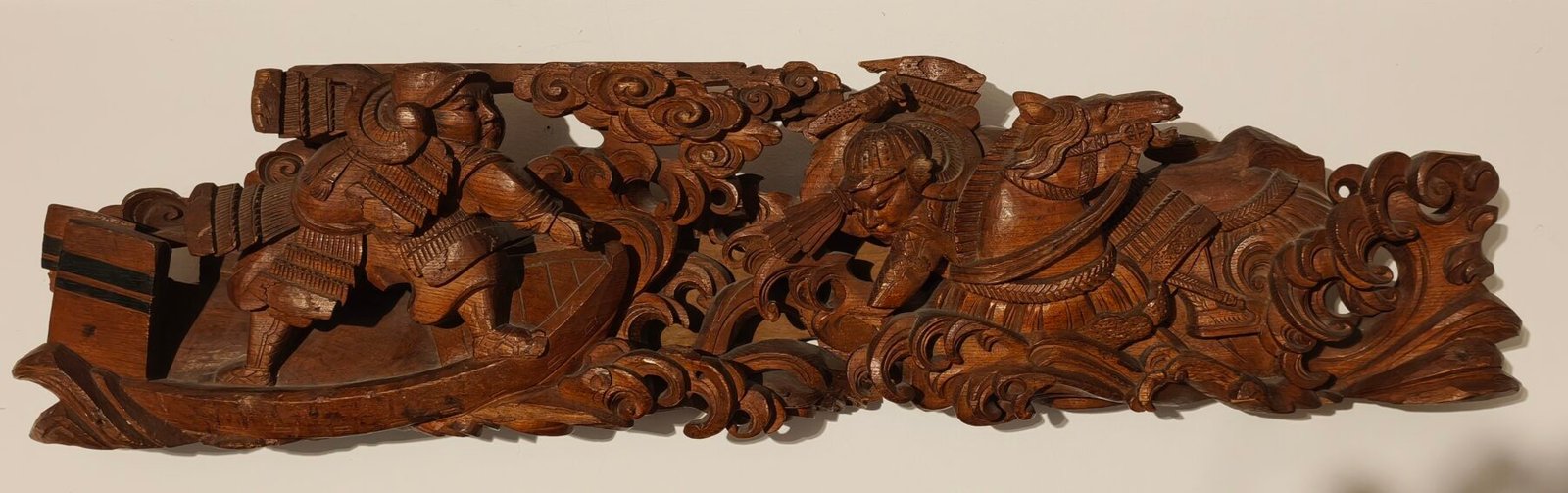
The Ranma-shi school of carvers (欄間師) constitutes a historical guild of master carpenters and sculptors highly specialized within traditional Japanese architecture, whose activity reached its era of greatest formal refinement and technical virtuosity during the Edo period (1603–1868). Emerging from the realm of temple and shrine carpentry (miyadaiju), this guild tradition was dedicated to creating ranma, upper transom friezes and dividing panels designed to facilitate ventilation and natural light flow between the rooms of feudal castles, lordly residences (shoin-zukuri), and religious complexes. Ranma-shi artisans were renowned for their absolute mastery of deep openwork woodcarving (sukibori) and multi-layered relief carving, utilizing noble woods such as Japanese cypress (hinoki) and Japanese zelkova (keyaki) to create compositions characterized by striking three-dimensionality and fluid dynamism visible from both sides of the panel. Their production was imbued with the classical iconography of Japanese folklore, depicting epic samurai warrior scenes based on the Heike Monogatari, allegories of nature, and auspicious motifs, consolidating an expressive plastic language that reflected the values of bushido and the aesthetics of the period. Today, works executed by the masters of this guild are preserved in iconic monuments of Japanese architectural heritage such as Nijo Castle in Kyoto and the Nikko Shrines, as well as in the Asian art collections of international institutions including the Tokyo National Museum, the Museum of Fine Arts in Boston, and the Metropolitan Museum of Art in New York, standing as an exceptional testament to the sculptural legacy of feudal Japan.
Works