
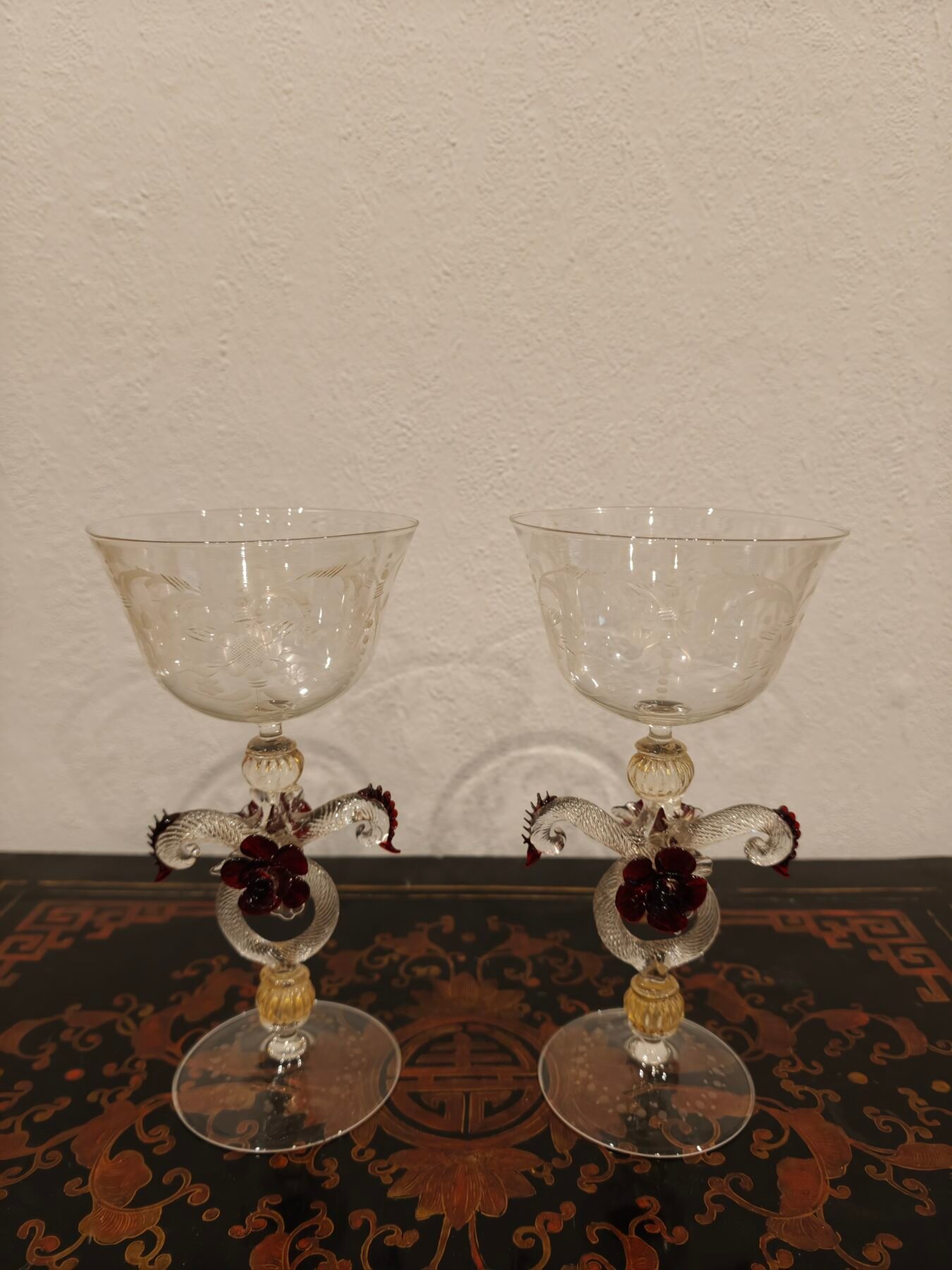
MURANO, Maestri Vetrai diGlass
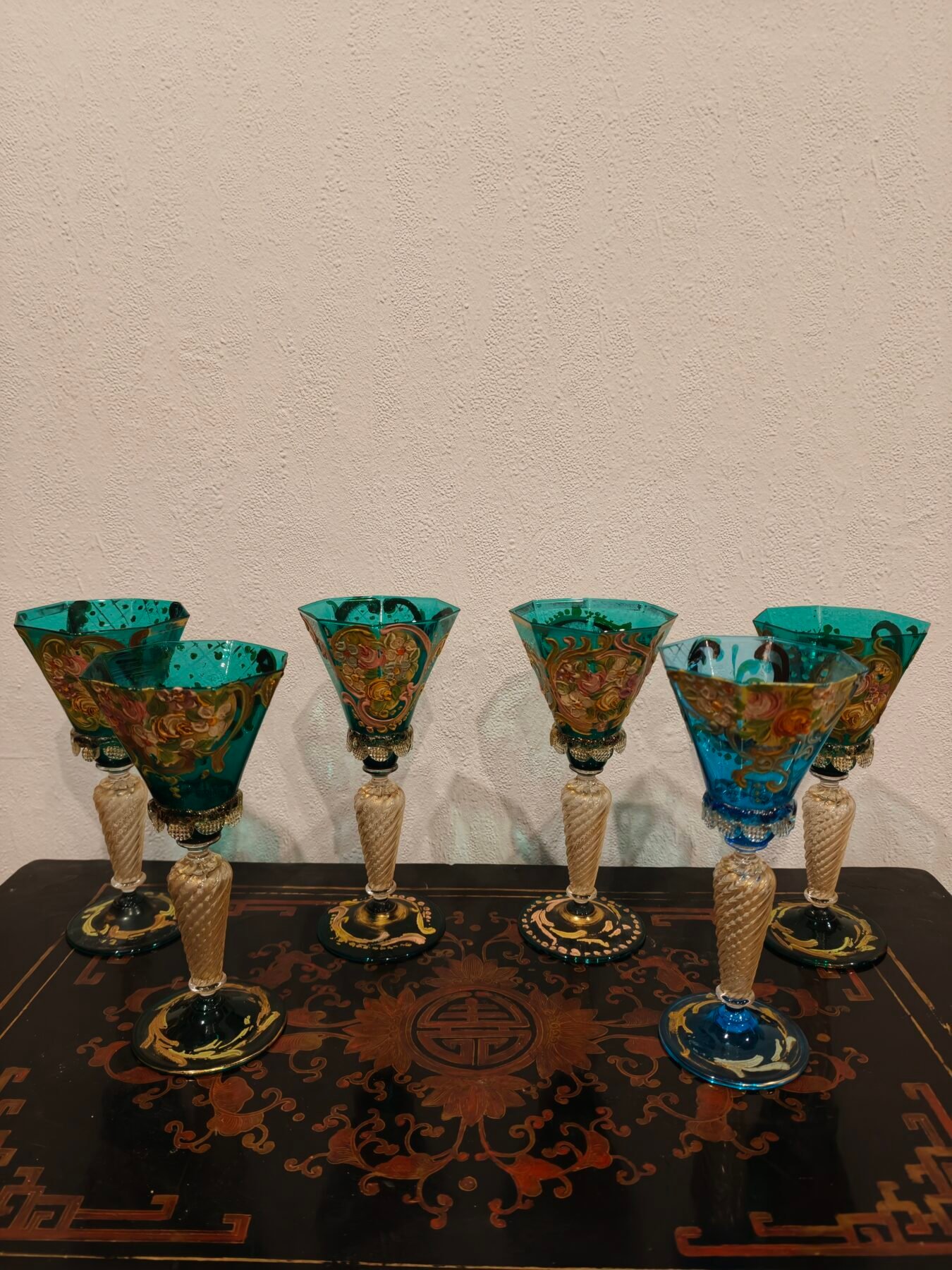
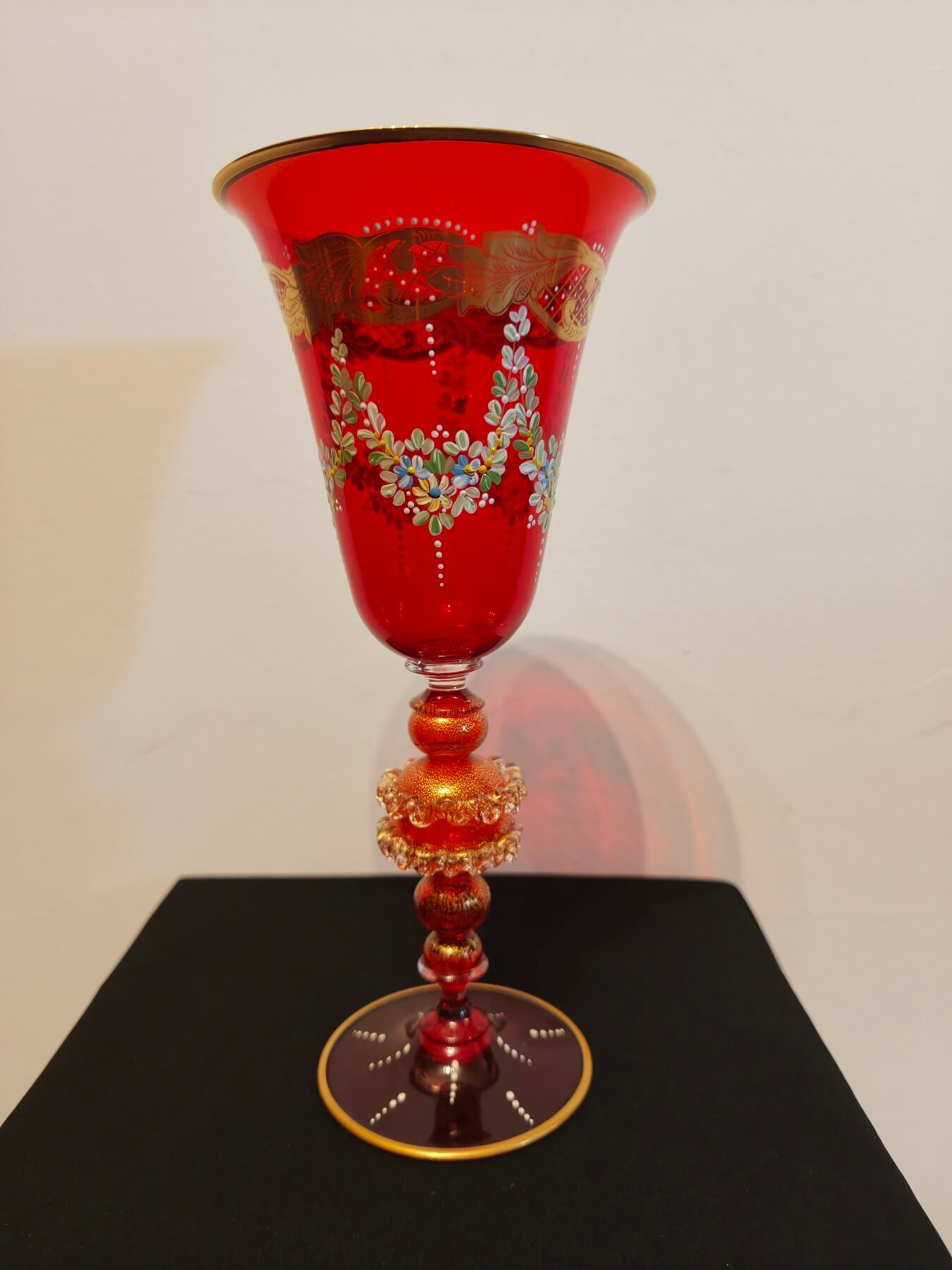
Set of six ceremonial gala goblets in Murano glass featuring a rich turquoise and emerald hue with a hexagonal rim profile, hand-blown using the chromatic glass technique (soffiato), renowned for its extreme lightness, structural refinement, and flawless transparency. The flared bowl features a six-sided faceted rim adorned with lavish high-relief polychrome glass enamels baked at high temperatures (a gran fuoco), depicting rich baroque rococo iconography with rose bouquets in rosy and crimson tones framed by gold leaf acanthus scrolls and stylized foliage. The lower portion of the bowl is complemented by an intricate decorative skirt of drop-shaped hot-applied glass elements called morise, infused with 24K gold leaf to provide striking depth and chromatic radiance. The structure is supported by a central twisted stem (ritorto) in the classic salviati style, executed with internal spiraling 24K gold leaf inclusions, flanked by molded knops and rings that balance the vertical poise of the piece. The wide, circular flared base in dense emerald-green glass is meticulously detailed along its upper slope with hand-painted gold scrolls and filigree, heat-fused in the kiln. This typology represents a quintessential masterpiece of mid-20th-century Venetian historicist revival, crafted by Murano’s premier Maestri Vetrai such as Salviati & C. or Glassleria Fratelli Toso. These designs carried forward the complex 18th-century Venetian glassmaking traditions created for European high aristocracy, diplomatic gifts, and grand international estates, with comparable technical and iconographic examples preserved in the collections of the Museo del Vetro in Murano (Venice), the Victoria and Albert Museum in London, the Corning Museum of Glass in New York, and the Musée des Arts Décoratifs in Paris.
The history of the master glassmakers of Murano (Maestri Vetrai di Murano) traces its roots back to the 8th century in the Venetian Lagoon, although their institutional status and artistic monopoly were permanently established in 1291 when the Great Council of the Most Serene Republic enacted the historic decree requiring the relocation of all melting furnaces to the island of Murano to prevent fires in the city center and, above all, to safeguard the formulation, melting, and shaping techniques of glass under strict state secrecy. From that moment, the maestri vetrai enjoyed exceptional social privileges, such as the prerogative to marry into patrician nobility and the right to carry a sword, while remaining subject to an absolute ban on leaving the Republic without official authorization, under severe penalties meant to preserve the Venetian commercial advantage over the rest of Europe. During the Renaissance, the island's technical genius reached its zenith with the invention of cristallo around 1450 by master Angelo Barovier, a revolutionary formula of absolute clarity that eliminated iron impurities to match the purity of natural rock crystal. Throughout the 16th and 17th centuries, the workshops developed an unparalleled technical repertoire that included filigree (reticello and zanfirico) using glass rods with opaque threads twisted into complex geometric patterns, calcedonio and lattimo compositions to simulate jasper, agate, or the opalescence of Oriental porcelain, and virtuoso hot-working (a mano volante) using pincers (borselle) and relief molds (a mezza stampatura) to sculpt ornate stems adorned with acanthus volutes, mascarons, and mythological creatures for the famed tipetti. Within the courtly etiquette of the Republic and European royalty, Murano glassware represented the pinnacle of sumptuary luxury, exemplified by the Doge of Venice's custom of using a different goblet at every banquet as a symbol of boundless wealth, which sparked fierce competition among the various fornaci to supply the aristocracy and the Habsburg, Valois, and Medici dynasties. Following the dissolution of traditional guilds in the late 18th century, the craft experienced a dramatic revival in the mid-19th century through figures such as Vincenzo Zanetti and Antonio Salviati, paving the way for a 20th century in which historical and high-end firms like Venini, Barovier & Toso, Archimede Seguso, and Elite Murano fused avant-garde design language with the rigorous execution of ancient artisans. In the international high-end auction circuit, featuring premier houses such as Christie's, Sotheby's, Pandolfini, Wright, and Phillips, the works of Venetian masters achieve extraordinary valuations due to the inimitability of their manual techniques, the extreme scarcity of unique or limited-run pieces, and the significant market premium awarded to examples preserved in immaculate condition. Today, the most important collections representing this sculptural and decorative lineage are preserved in the world's most prestigious museum institutions, including the Museo del Vetro in Murano, the Museo Correr in Venice, the Victoria and Albert Museum in London, the Musée des Arts Décoratifs in Paris, the Corning Museum of Glass in New York, The Metropolitan Museum of Art in New York, the Kunstgewerbemuseum in Berlin, the Rijksmuseum in Amsterdam, and the Museo Poldi Pezzoli in Milan.
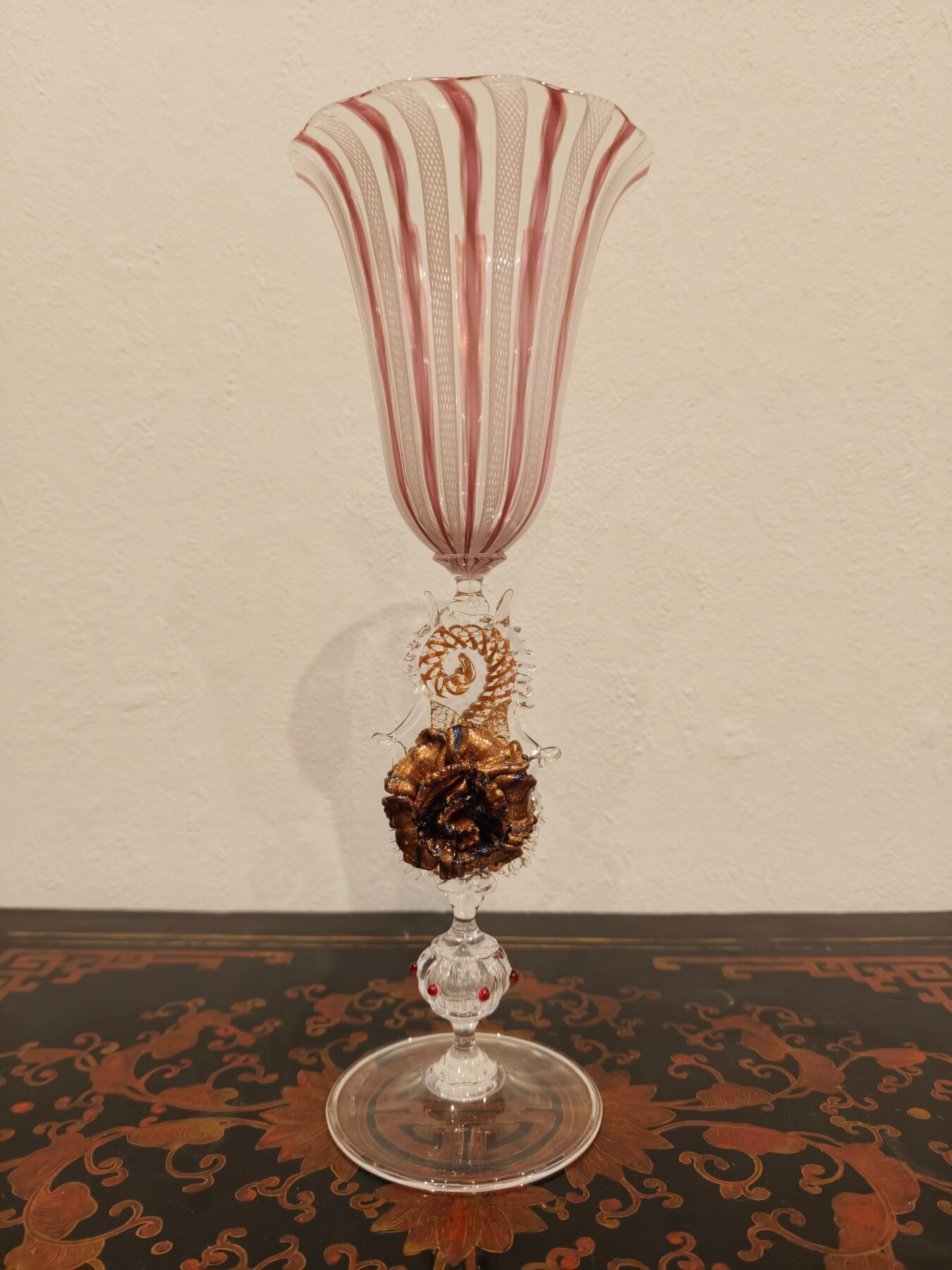
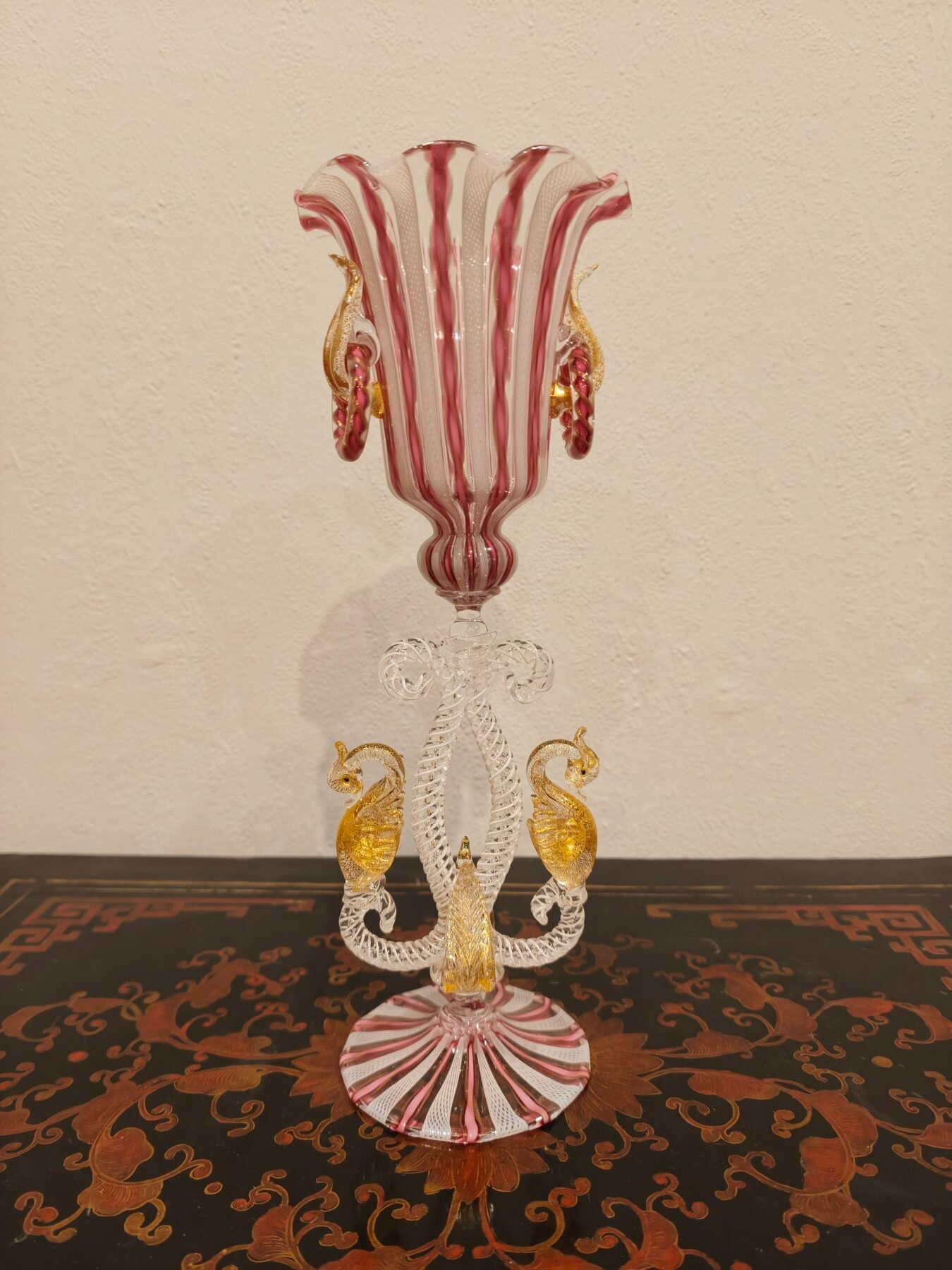
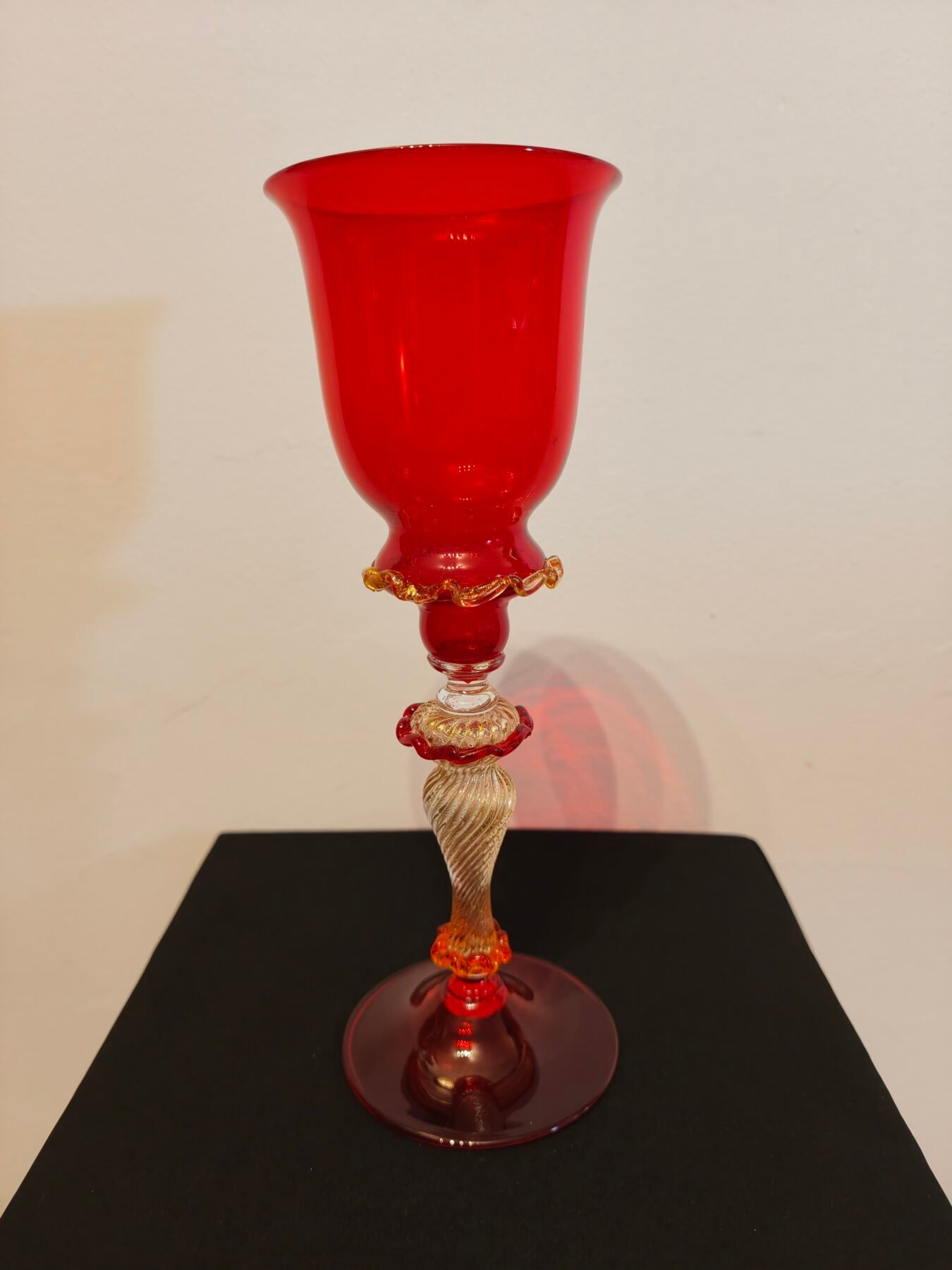
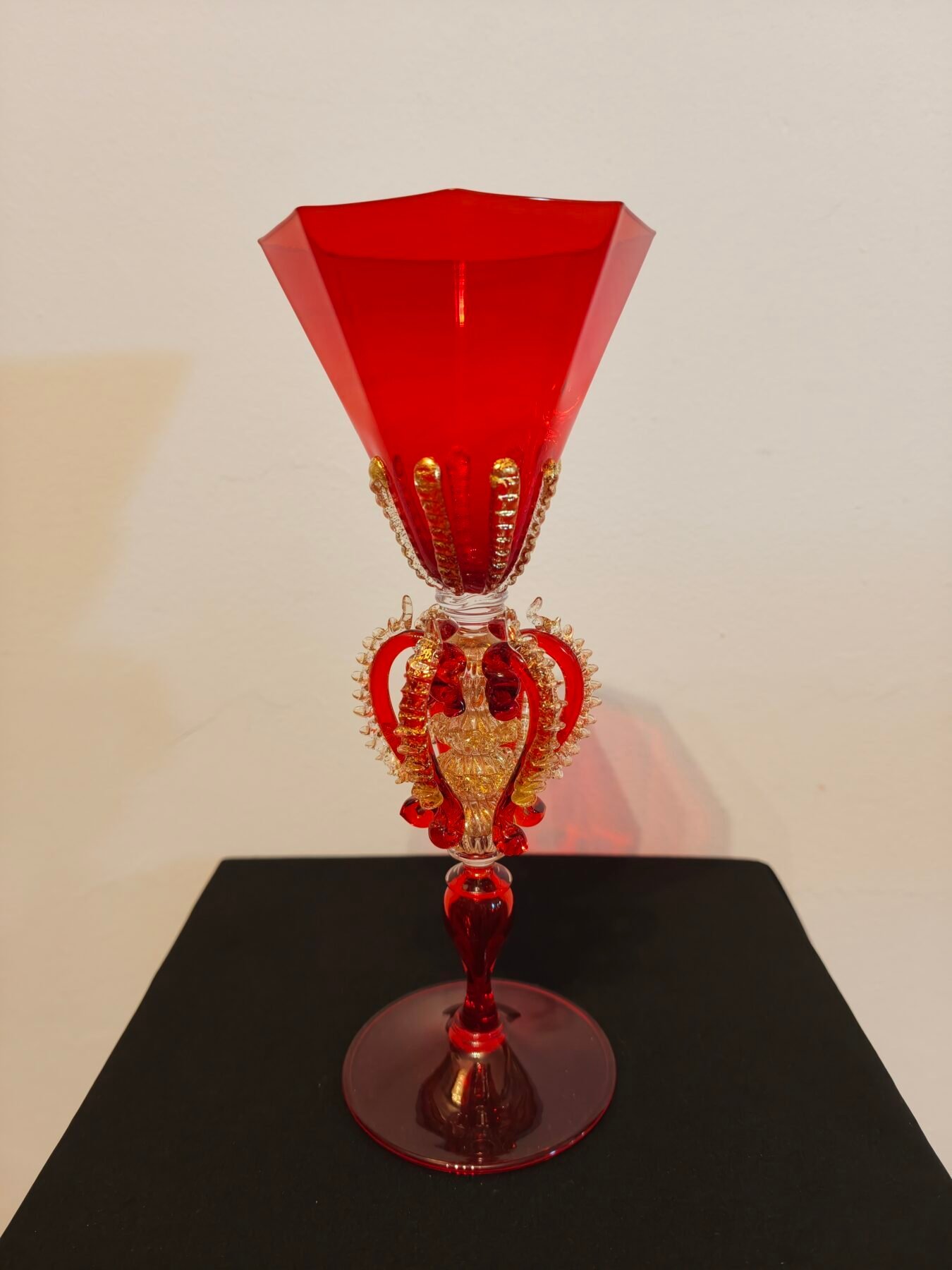
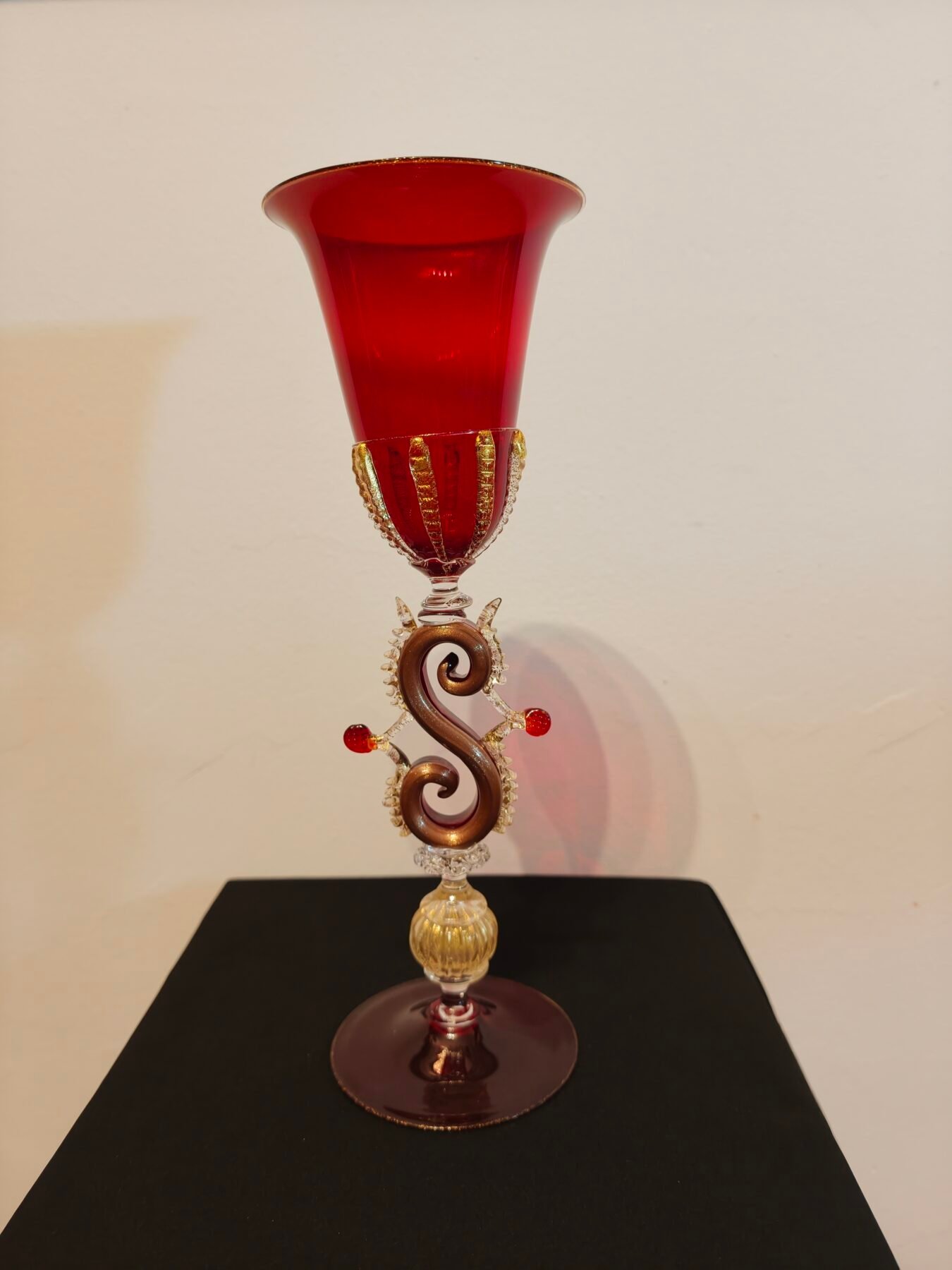
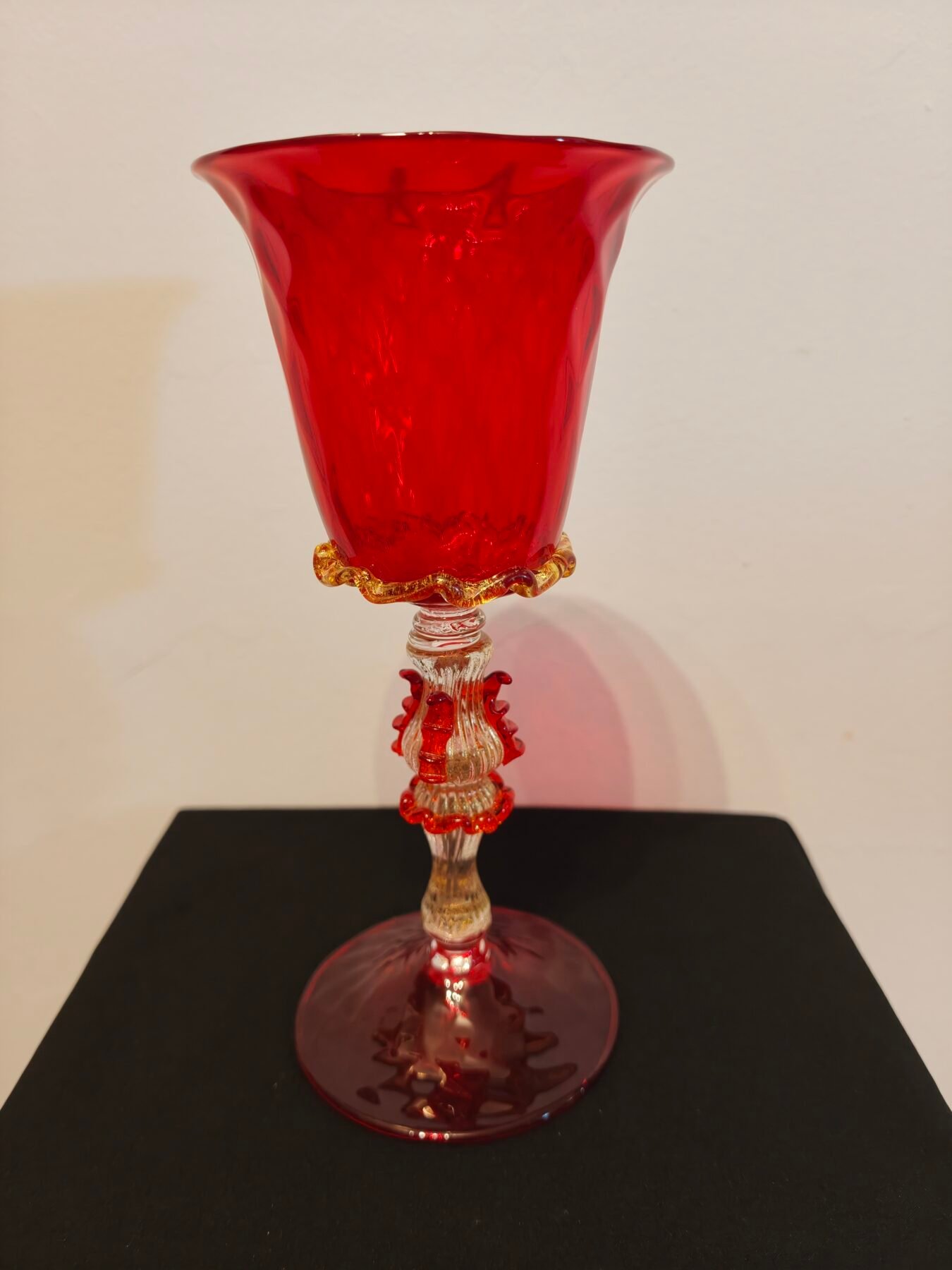
Pieces related to the same artist.