
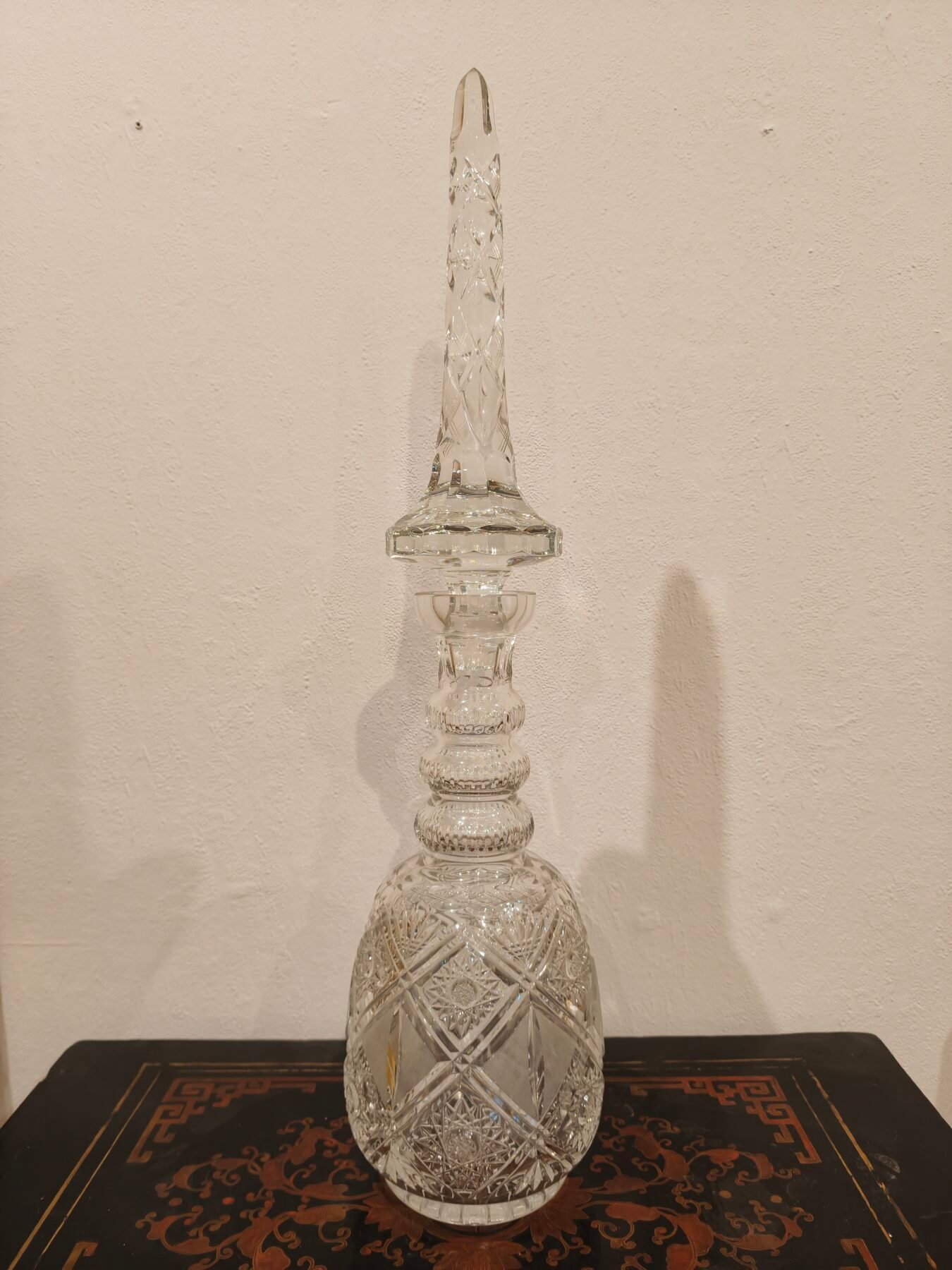
Monumental "Hors-Catalogue" Exhibition Sideboard Decanter
4.000 €
This monumental exhibition or gala carafe (carafe de dressoir), attributed to the Compagnie des Glassleries de Baccarat (Lorraine, France, c. 1870–1890) under the technical designation of grande carafe de dressoir hors-catalogue or monumental uncatalogued sideboard decanter, constitutes an extraordinary display masterpiece and high-collectible showpiece (pièce d'apparat et de grande forme) executed in ultra-high density, optically pure lead crystal (cristal au plomb de haute densité); boasting a colossal scale exceeding 70 cm in height (reaching approximately 73–78 cm including its stopper), the vessel displays an elongated pear-shaped silhouette of pronounced verticality combining a bulbous body with an impressive neck ringed in faceted knops and a monumental needle-shaped conical stopper (bouchon aiguille en pique), being entirely covered in a complex scheme of wheel-cut geometric motifs (taille à la roue) featuring fine diamond points (taille en pointe de diamant fine) and crisp-edged cross-hatching that yield a diamond-like refractive index and brilliant light iridescence; on its underside (le cul de la carafe), the piece stands out for the complete grinding down of the pontil scar through an impeccable 16-point wheel-cut starburst (cul à étoile taillée à 16 rayons), a level of technical complexity and cutting density executed in water-polished bevels that represents an exclusive hallmark of the master glassworks of Lorraine (Baccarat and Saint-Louis), while remaining completely absent in traditional Bohemian production—where bases were limited to shallow 8 or 12-point stars—thus categorically confirming its top-tier French origin; significantly exceeding the scale of standard commercial decanters of the period (28 to 40 cm), this creation is classified as an uncatalogued special commission (pièce hors-catalogue sur commande), crafted by master glass artisans for the prestige showcases of the Paris Universal Expositions (1878 and 1889) or royal orders for international high nobility, with comparable examples in technique and format preserved in the collections of the Musée du Glass de Baccarat, the Musée des Arts Décoratifs in Paris (MAD), the Musée La Grande Place in Saint-Louis-lès-Bitche, and the historical Royal Collections of the Royal Palace of Madrid, the Tsarist palaces of Saint Petersburg, or the Dolmabahçe Palace in Istanbul, representing a valuable museum-grade object (objet de musée).
TechniqueGlass de plomo soplado a pulso, tallado a la rueda y pulido al agua
Dimensions75cm
YearCirca 1870-1890
ArtistBACCARAT, Compagnie des Glassleries de
BACCARAT, Compagnie des Glassleries de
Founded in 1764 under the royal decree of King Louis XV granted to Cardinal Louis-Joseph de Laval-Montmorency in the town of Baccarat (Lorraine), the Compagnie des Glassleries de Baccarat was originally established as a glass workshop before transforming, following the installation of its first lead crystal furnace in 1816, into France's paramount manufacture of luxury and mouth-blown excellence, reaching its historical maturity during the 19th century through an unparalleled mastery of chemical material purity, the development of geometrically precise wheel-cutting techniques (taille à la roue), and patented optical grinding methods that redefined the decorative arts. After receiving its first royal commission in 1823 from Louis XVIII and consolidating its signature aesthetic with the iconic Harcourt goblet in 1841, the firm turned the Paris Universal Expositions (most notably the 1855, 1867, 1878, and 1889 editions) into its primary stage for international prestige, where its master artisans—consistently awarded gold medals—showcased monumental showpieces (pièces d'apparat et de grande forme), palace-scale crystal chandeliers such as the famous Zénith, finely enamelled perfume bottles, and colossal uncatalogued sideboard decanters (carafes de dressoir hors-catalogue). This technical supremacy in cold work, characterized by fine diamond-point cutting, fire gilding, acid etching, and iconic base treatments such as the 16-point cut starburst (cul à étoile taillée à 16 rayons), captivated the European high aristocracy and global royal dynasties, establishing Baccarat as the favored purveyor to the imperial court of Napoleon III, the Royal House of Spain, the Ottoman courts, and most notably the Russian Imperial Family, for whom the manufacture crafted legendary commissions including the "Tsar's Candelabra" for Alexander III and state banquet glass services for Nicholas II. Today, the rich historical heritage, master prototypes, original molds, and monumental display pieces of the Compagnie des Glassleries de Baccarat are preserved and exhibited across leading museum institutions worldwide: primarily at its corporate and heritage sites, the Musée du Glass de Baccarat in Lorraine and the Maison Baccarat at Place des États-Unis in Paris (formerly the mansion of Marie-Laure de Noailles, redesigned by Philippe Starck); within France's major national collections, such as the Musée des Arts Décoratifs (MAD) in Paris, the Musée d'Orsay, and the Musée du Louvre; and among prestigious international palatial holdings, including the Royal Palace of Madrid and the Palace of La Granja de San Ildefonso in Spain, the Dolmabahçe Palace in Istanbul (renowned for housing its monumental crystal staircase), the Hermitage Museum in Saint Petersburg, and the decorative arts collections of the Victoria and Albert Museum (V&A) in London, solidifying the brand as an enduring symbol of French art de vivre and the pinnacle of crystal craftsmanship.
Recommended works
Other selected pieces from the Art Andorra catalogue.
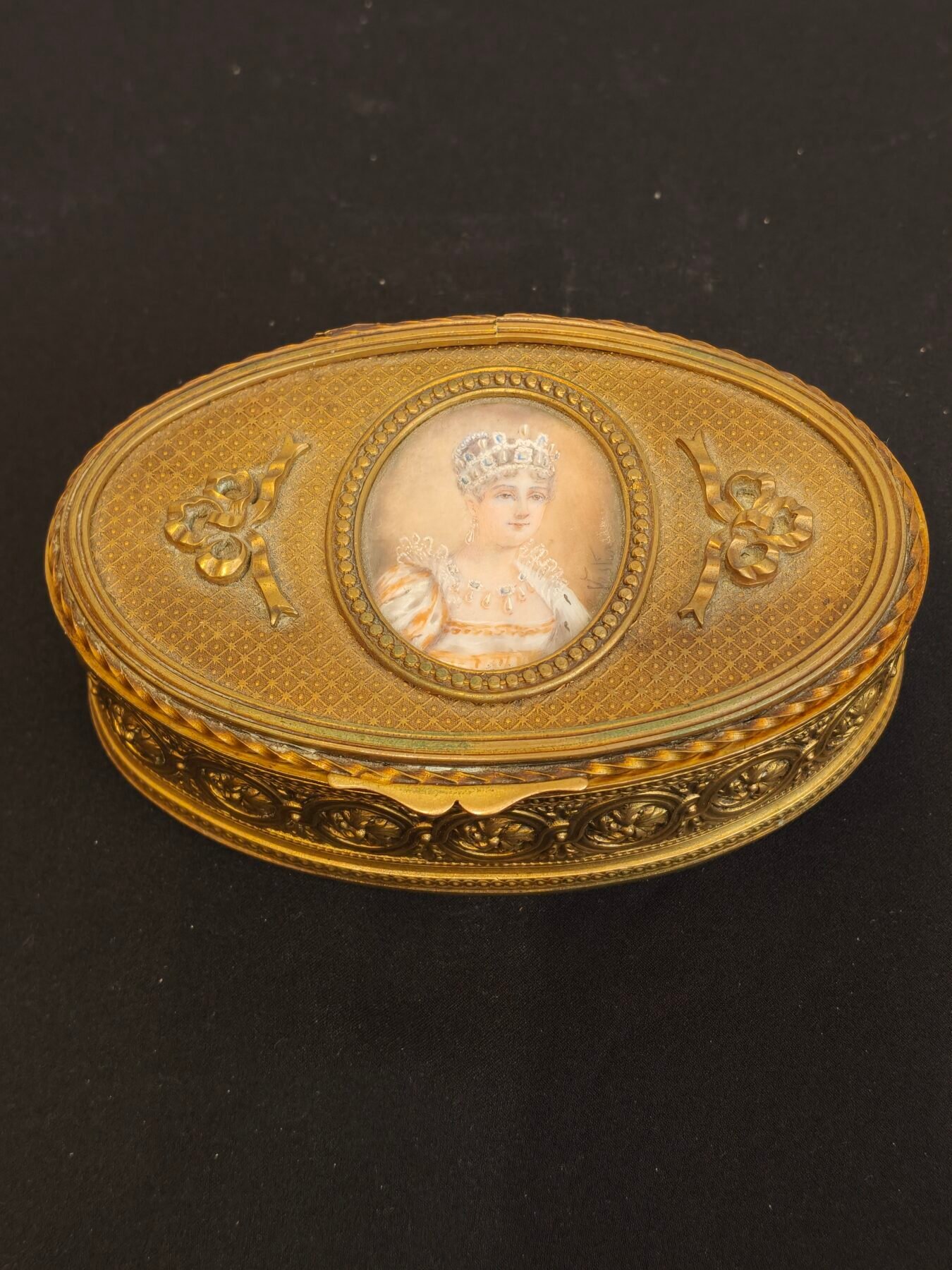
VESTIER, AntoineAntiques
Second Empire Jewelry Box with Miniature of Empress Joséphine
500 €Open profile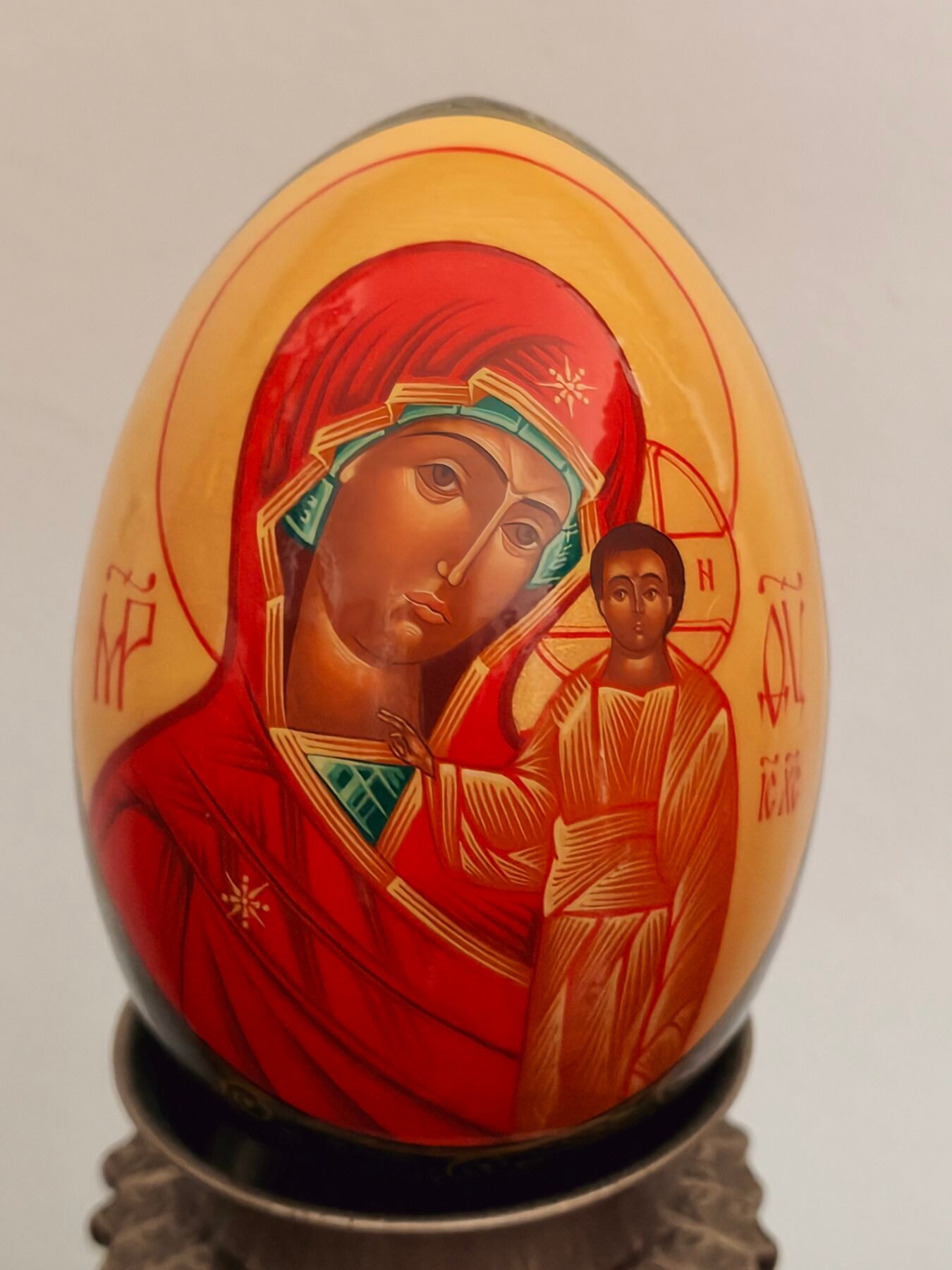
VLADÍMIR, Escuela deReligious art
Russian Lacquered Wooden Easter Egg "Our Lady of Kazan" Signed
250 €Open profile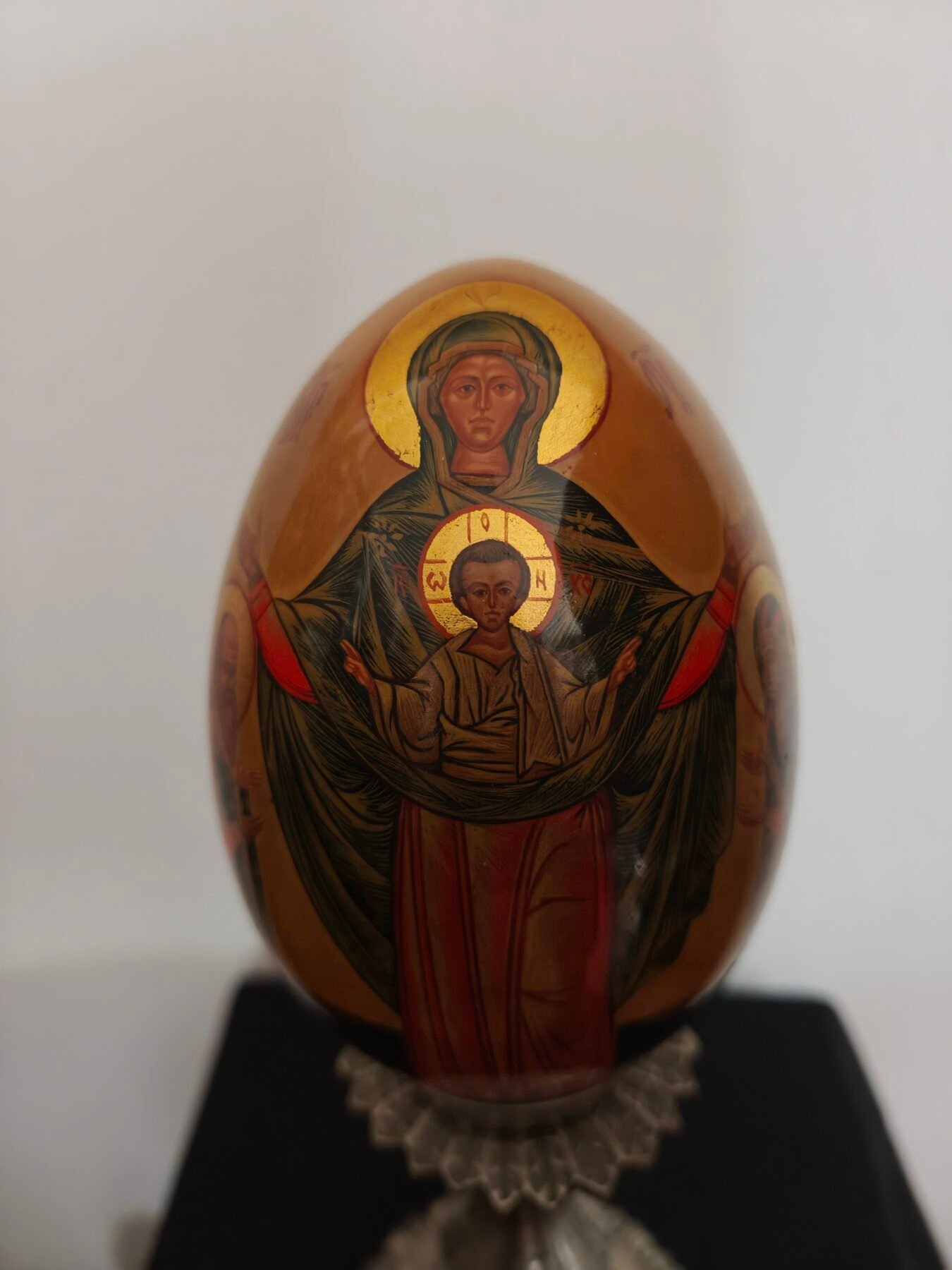
ABRÁMTSEVO, Escuela deReligious art
Russian Lacquered Wooden Easter Egg "Our Lady of the Sign" Signed
350 €Open profile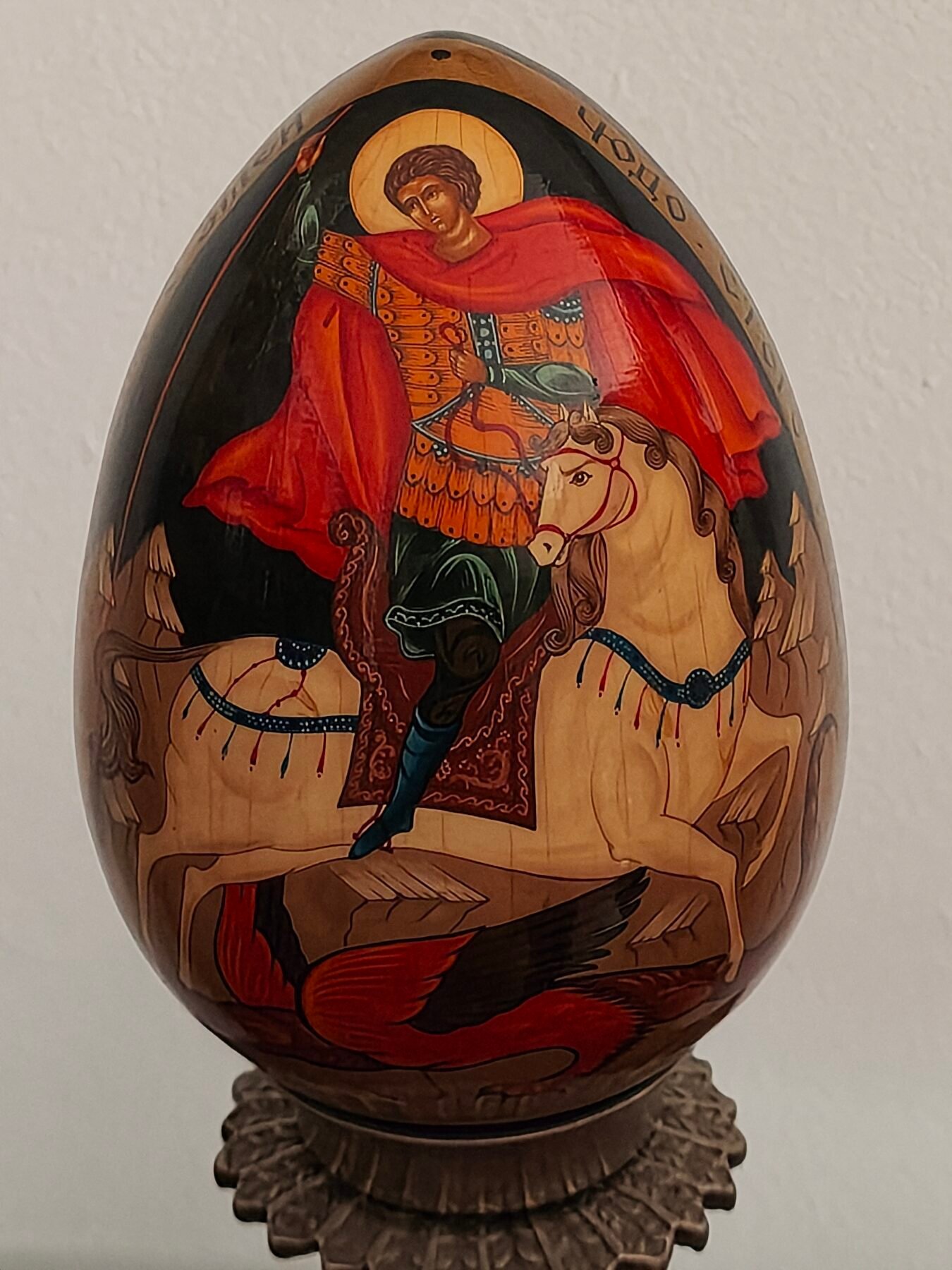
PALEJ, Escuela deReligious art
Russian Lacquered Wooden Easter Egg Depicting Saint George and the Dragon Monogrammed
250 €Open profile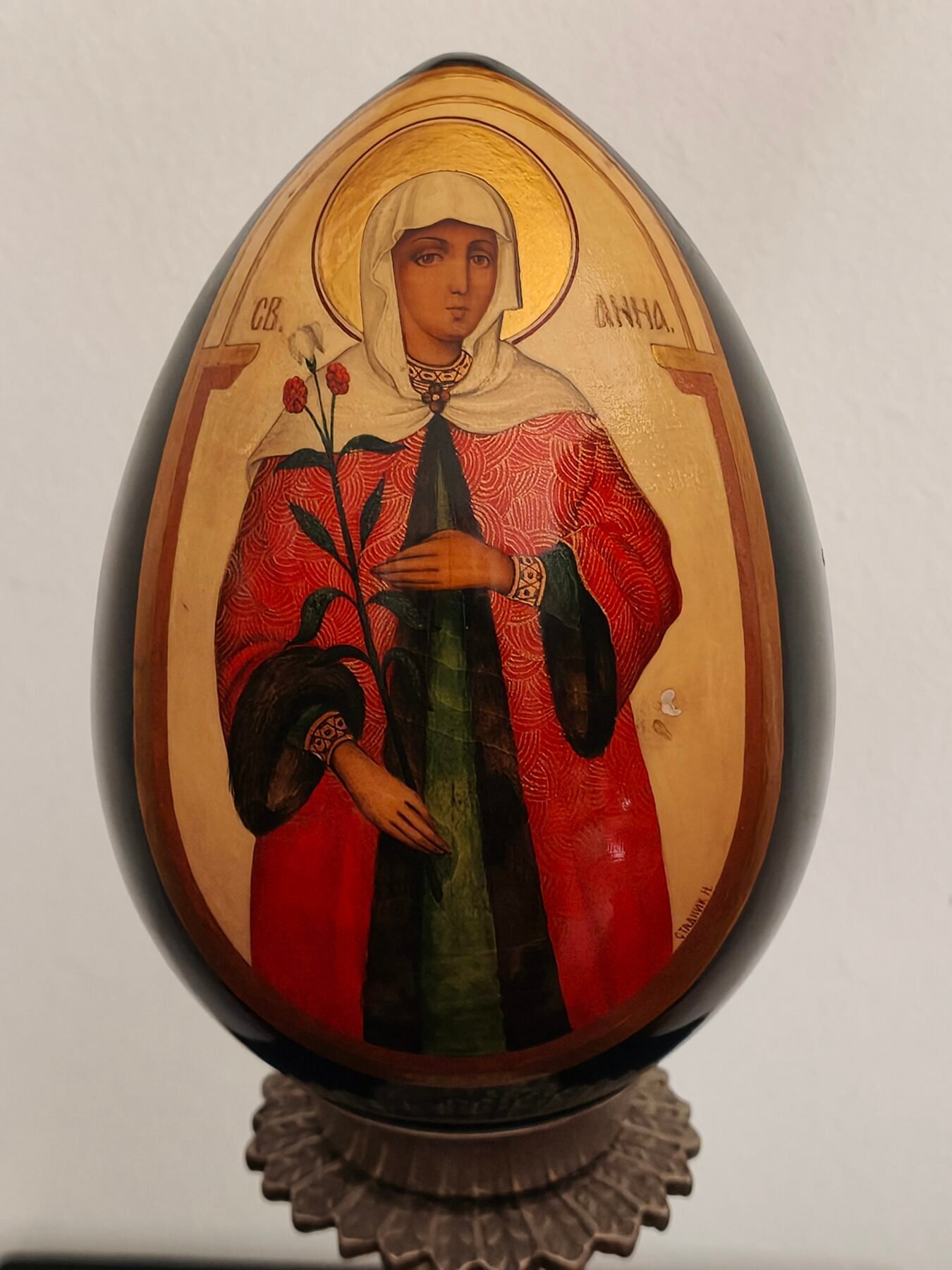
PALEJ, Escuela deReligious art