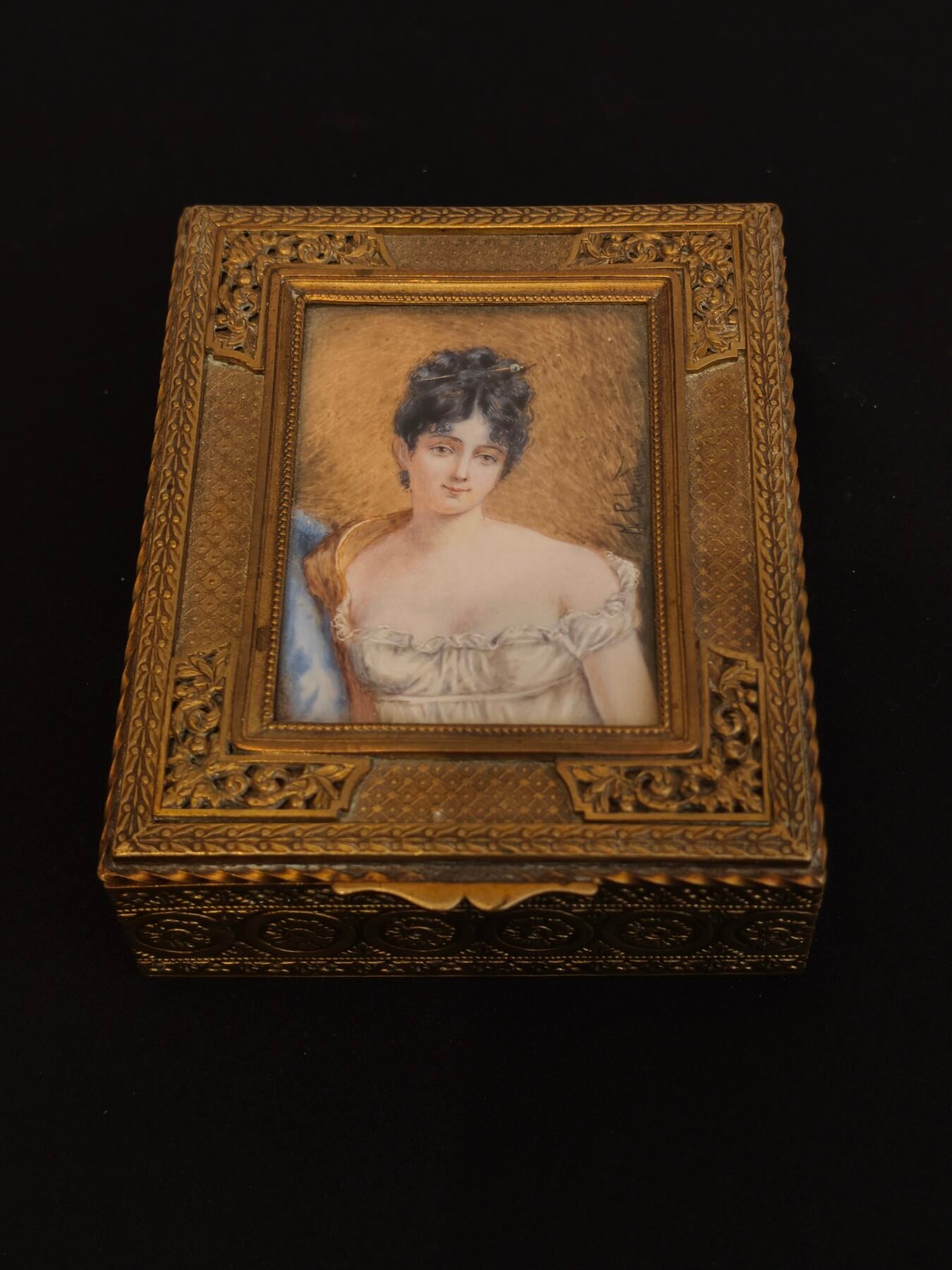
Second Empire Jewelry Box with Portrait of Madame Récamier
500 €
This refined rectangular jewelry box measuring 11 x 9 cm, crafted in gilt bronze and lined with plush interior velvet, constitutes a distinguished example of French decorative arts from the Second Empire period (c. 1850-1860) inspired by Neoclassical and Empire revival aesthetics, featuring an articulated lid richly engine-turned with guilloché patterning and decorated corner spandrels framing a rectangular portrait miniature in gouache on paper signed by the painter Octave Roland (1799-1886), with a composition directly based on the celebrated and iconic portrait of Madame Récamier painted by Baron François Gérard in 1802 (Portrait of Madame Récamier, housed at the Musée Carnavalet), a cherished painting that she ultimately gifted to Prince Louis Charles Augustus of Prussia in 1822; the sitter is depicted wearing her signature high-waisted white muslin gown and classic neoclassical updo, rendered with romantic sensitivity and delicate miniaturist execution, with related boxes and historical portraits preserved in international collections including the Musée Carnavalet in Paris, the Musée des Arts Décoratifs in Paris, the Château de Malmaison, the Metropolitan Museum of Art in New York, and the Wallace Collection in London.
TechniqueBronze dorado y gouache sobre papel
Dimensions11x9cm
YearCirca 1850-1860
ArtistROLAND, Octave
ROLAND, Octave
Octave Roland (1799–1886) was a 19th-century French painter active in artistic circles of the period and known in historiography and collecting for his refined portraits and historicist miniatures inspired by the great masters of the Neoclassical and Romantic periods. Although he maintained close relationships with artists in his circle—being famously immortalized in satirical and community works from Rosa Bonheur’s circle and the artistic colony of By—his personal output stands out for the meticulous execution of small-format portraits and high-quality technical copies based on icons of French painting. His small-scale works, miniatures, and decorative pieces are typically preserved in private collections specializing in Second Empire decorative arts and within museum holdings and centers dedicated to prints and French pictorial heritage, such as the Centre National des Arts Plastiques (CNAP) and various institutional art galleries focused on the 19th century.
Recommended works
Other selected pieces from the Art Andorra catalogue.