
Elegy of Youth
350 €
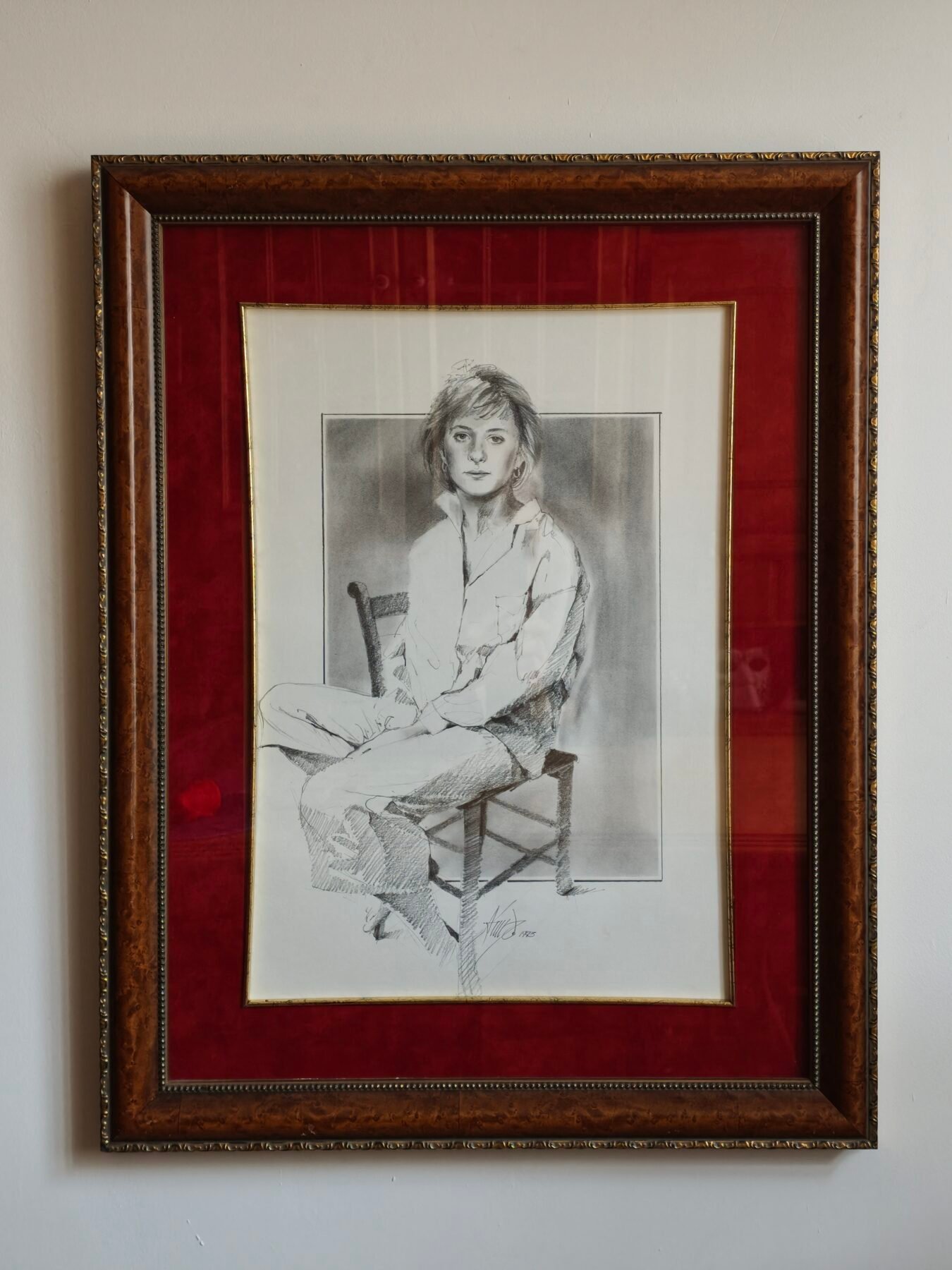
Signed and dated 1993 by the renowned painter and draughtsman Jacques Donnay, this masterwork represents an exceptional example of intimate portraiture and contemporary figuration executed through a mixed technique of graphite pencil and charcoal on heavy paper. Measuring 65x51 cm including its period frame, the composition features a life portrait of the artist's daughter seated on a traditional rush-seat chair, rendered in a formal visual language that connects directly with the great tradition of European academic drawing and the subtlety of late 20th-century French portraiture. Technically, the work stands out for a fascinating methodological duality: while the young woman's face is treated with a lenticular, hyperrealistic drawing style and an extraordinarily subtle tonal modeling where chiaroscuro defines three-dimensionality and the profound psychological depth of her gaze, the torso, limbs, and furniture are loosely sketched with an energetic, synthetic, and markedly gestural stroke—a plastic choice that echoes the non finito explorations of classical masters and avant-garde preparatory studies. Donnay's stylistic influences in this piece draw from the poetic realism and elegance of continental figurative portraitists, where the restraint of expressive mediums—the mere contrast between carbon and the natural highlight of the paper fiber—succeeds in conveying an atmosphere of serene nostalgia and intimate family warmth. The work's state of conservation is excellent, preserved under a high-end handcrafted frame composed of a patinated wooden molding with an inner gold liner, further enhanced by a striking crimson red velvet mat that creates a vibrant chromatic contrast against the gray and deep tones of the graphite, presenting a museum-quality piece ready for display in top-tier figurative art collections.
TechniqueDrawing a lápiz de grafito y carboncillo sobre papel
Dimensions65x51cm
Year1993
ArtistDONNAY, Jacques
DONNAY, Jacques
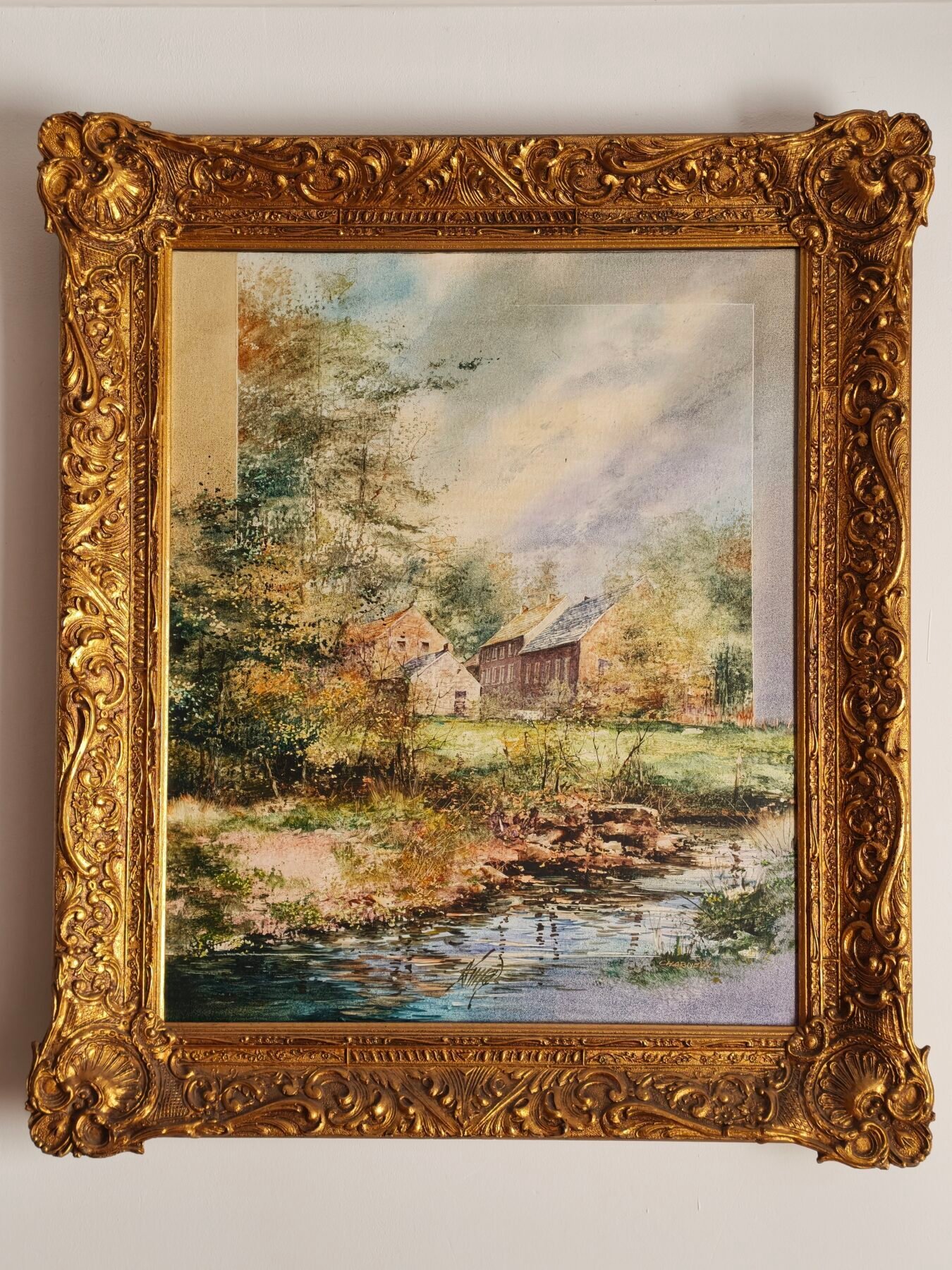
Jacques Donnay was born in Visé, Belgium, in 1947, being a distant cousin of the late painter and engraver Jean Donnay, and enrolling in 1963 at the Institut Supérieur des Arts Décoratifs et Graphiques Saint Luc in Liège, where he received rigorous training as a graphic designer under Fernand Bree to refine a technical mastery encompassing panel oil painting, graphite, and charcoal. After holding his first solo exhibition in Visé in 1971, he has continuously captured the charm of Walloon Region villages, establishing himself as a versatile painter, draughtsman, and portraitist who goes beyond capturing the soul of the landscape, notably illustrating the book "Liège en flânant" by novelist and art critic Jean Jour. His stylistic universe draws from the rich heritage of the Belgian figurative school and the continental masters of poetic realism, incorporating a constant inquiry into sitter psychology, atmosphere, and spatial structure. One of the most singular and fascinating aspects of his oeuvre lies in his refined use of illusionistic devices and perspective techniques bordering on trompe-l'œil, breaking two-dimensional boundaries by introducing elements that appear to project beyond the frame, overlapping planes, or interior framing such as subtle background windows, all complemented by a striking use of non finito contrasting hyperrealistic finishes with free, gestural linework. This unmistakable talent has earned international acclaim over the years through regular exhibitions across Belgium, France, the Netherlands, Spain, Germany, Switzerland, Italy, Canada, and the United States — with particular prominence in San Francisco —, placing his works within major private collections and institutions throughout Europe and North America.
Works
More works by this artist
Pieces related to the same artist.