
Memory of Paris
1.800 €
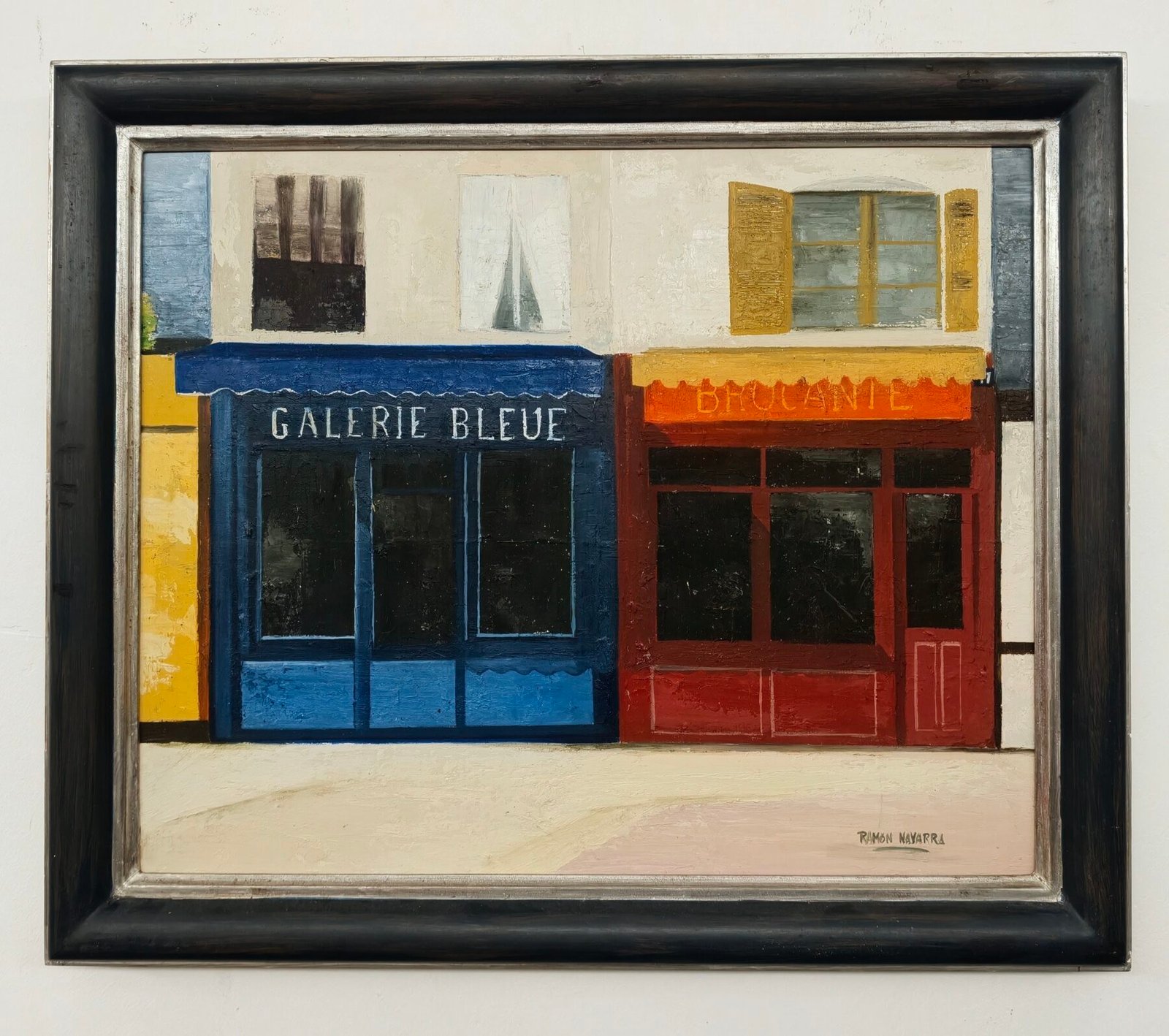
This remarkable composition in oil on canvas (71×60 cm) by Ramón Navarra exemplifies the artist's sustained exploration of urban architecture, the memory of travel, and the poetics of everyday spaces. The work offers a frontal, orthogonal depiction of the facade of two French commercial establishments traditionally associated with collecting and memory —a "Galerie Bleue" and a "Brocante" shop— organizing a rigorous geometric composition in which the tectonic framework of windows, awnings, and shutters establishes a rhythmic dialogue of notable formal restraint. Stylistically, the canvas features a rich impasto treatment applied with dense palette-knife work, bestowing a tactile relief upon the street surface and the plastered walls, thereby revealing Navarra's keen interest in the physical materiality of the medium. The color palette, structured through the dialectical contrast between the deep cobalt blue of the gallery and the earthy burgundy and golden ocher tones of the antique shop, demonstrates an exquisite mastery of luminous harmony. This synthetic vision of the cityscape evokes the stylistic underpinnings of analytical realism and European metaphysical painting, recalling the silent timelessness of Edward Hopper's facades and the compositional discipline of Mediterranean contemplative painting. The complete absence of the human figure heightens the atmosphere of quiet contemplation and nostalgia, transforming the urban scene into a visual journal of sensory experiences wherein architecture and everyday objects endure as vestiges of collective memory. Ramón Navarra's institutional standing and critical recognition are evidenced by his international exhibition history across Spain, France, and the United States, as well as the presence of his works in major institutional collections, contemporary art foundations, municipal pinacothecas, and museum archives that honor his ability to synthesize architecture, journey, and spatial poetics.
TechniqueOil sobre tela
Dimensions71x60cm
YearCirca 2005
ArtistNAVARRA, Ramón
NAVARRA, Ramón
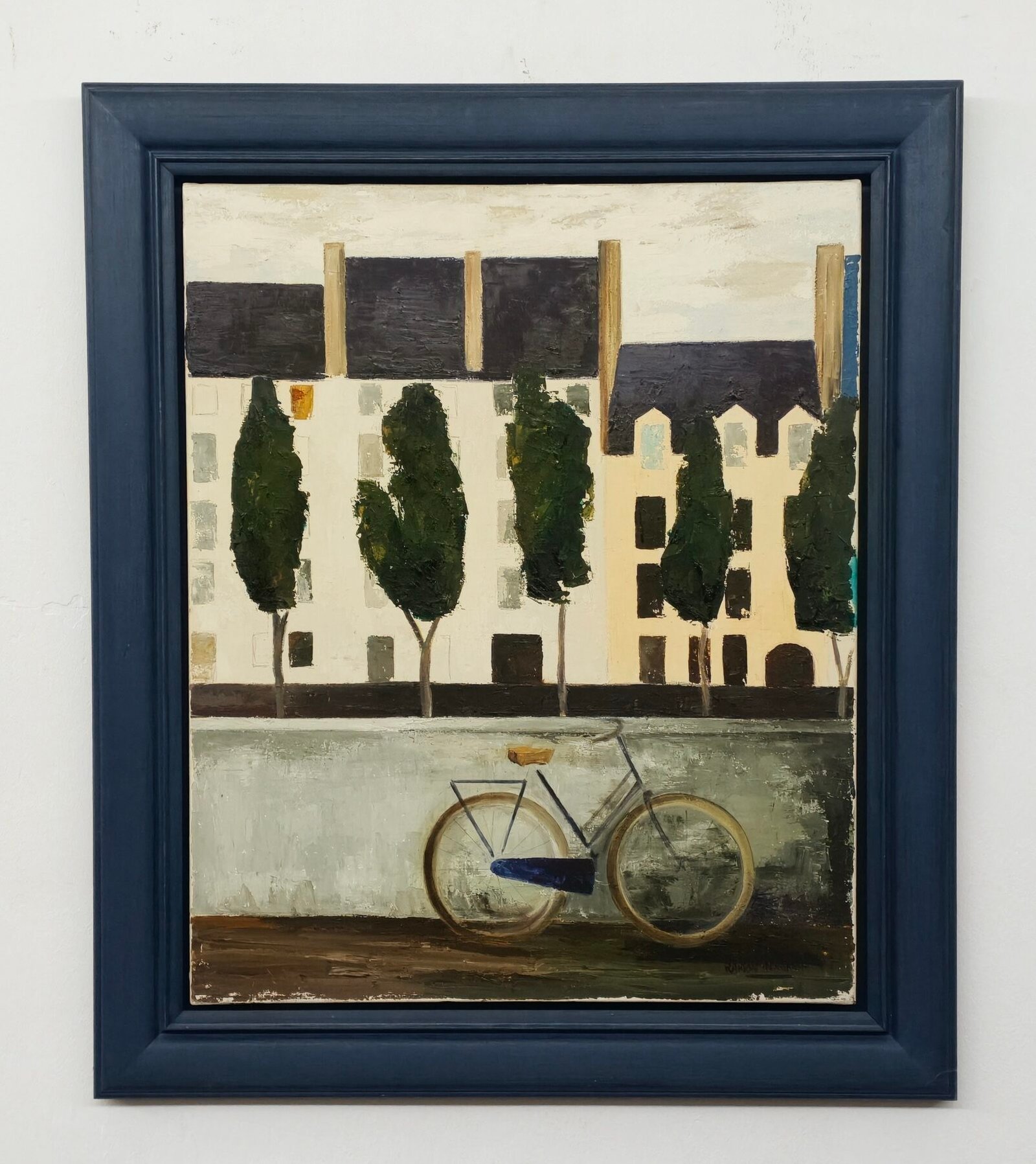
Ramón Navarra (Spain, 1956), a prominent figure in contemporary Spanish landscape and architectural figuration, has structured his artistic career around the lyrical and structural exploration of inhabited space, the urban environment, and nature filtered through the lens of active memory. Trained in the fine arts and embedded within the tradition of contemplative Mediterranean painting, his pictorial language bears the imprint of the great masters of analytical realism and the graphic syntax of modern architecture, drawing influence from European metaphysical painting, the compositional rigor of classical vedutism, and the poetics of distance characteristic of 20th-century landscape art. Through painstaking technical mastery uniting geometric precision, formal refinement, and a sophisticated treatment of atmospheric light, Navarra conceives his canvases as a visual journal and a phenomenology of travel where the orthogonal structure of buildings engages in a harmonious dialogue with the fluidity of organic elements. His body of work, distinguished by a keen sense of balance, symmetry, and a refreshing evocative objectivity, has achieved significant international recognition through solo and group exhibitions across Spain, France, and the United States, consolidating his presence in institutional collections, private contemporary art foundations, municipal pinacothecas, and various national and international museum holdings that preserve his oeuvre as a testament to the synthesis of architecture, nature, and collective memory.
Works
More works by this artist
Pieces related to the same artist.