
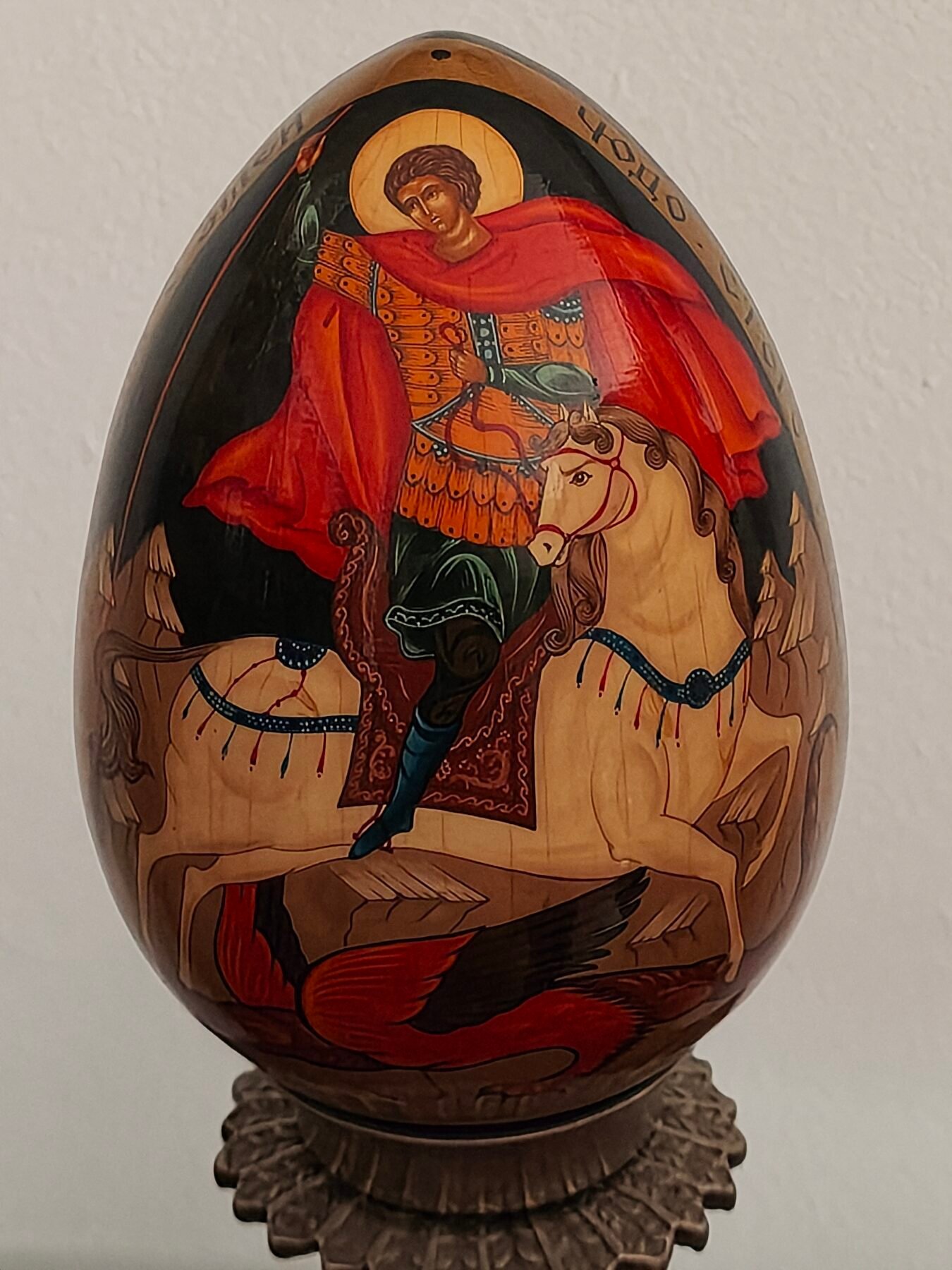
PALEJ, Escuela deReligious art
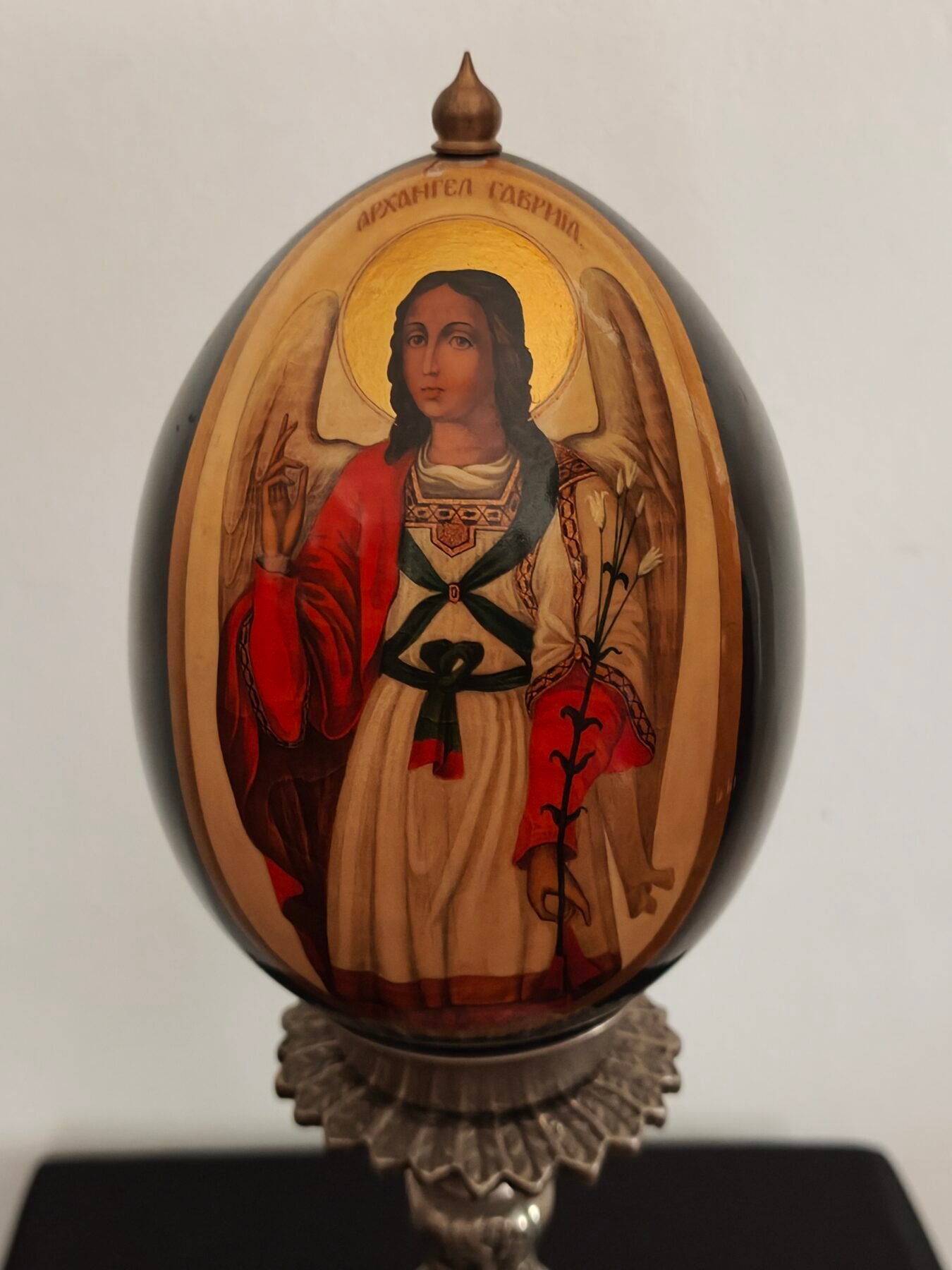
This exceptional 17 cm high devotional and passion-themed Easter egg represents a significant piece of contemporary Russian Orthodox iconography and portable iconostasis, crafted in the 19th-decade (c. 1990s) on a finely jet-black lacquered wooden structure topped with a brass onion dome finial (glava). The iconographic obverse features a formal depiction of the Archangel Gabriel (Архангел Гавриил, as inscribed in Church Slavonic script above the gilded halo), portrayed in half-length holding his right hand in a gesture of blessing and bearing a lily spray in his left hand, symbolizing the Annunciation and divine purity. Stylistically, the work reflects the revival of traditional lacquered miniatures from the renowned artisan centers of Palekh, Mstiora, and Kholuy following the fall of the Soviet Union in the 1990s, where master iconographers re-established historical lacquer techniques combined with the precise academic miniaturism of the Tsarist era. The reverse displays a refined gold-bordered Latin cross set against the lustrous black lacquer, symbolizing the Resurrection of Christ (Paskha), the central theological mystery linked to the Russian tradition of gifting decorated eggs during Easter celebrations as a symbol of eternal life and rebirth. Works of this elevated technical standard and iconographic heritage—encompassing porcelain, lacquered wood, and precious metals—are preserved and researched within major sacred and imperial art collections worldwide, including the Kremlin Armoury Museum in Moscow in its Ecclesiastical Treasures Hall, the Fabergé Museum in St. Petersburg (Shuvalov Palace), the State Russian Museum in St. Petersburg in its Department of Iconography and Lacquered Miniatures, the Hillwood Estate, Museum & Gardens in Washington D.C. in its Russian Imperial Art Collection, and the Icon Museum of Frankfurt (Ikonen-Museum Frankfurt).
The Palekh School represents one of the most refined and celebrated pinnacles of traditional Russian decorative arts and miniature painting. Originating in the historic village of Palekh (Ivanovo region), the settlement distinguished itself from the 17th century onward as a prominent center for Orthodox icon painting, renowned for its stylistic delicacy, intricate line work, and mastery of tempera enriched with gold leaf accents. Following the Russian Revolution of 1917 and the Soviet regime's ban on sacred art, Palekh master iconographers ingeniously repurposed their craft by founding the Palekh Guild of Ancient Painting in 1924, adapting the age-old technique of tempera on wood and levkas gesso priming to the decoration of papier-mâché and hardwood boxes, caskets, plates, and eggs finished in jet-black lacquer. This unique style is characterized by allegorical motifs, Russian folktales, mythology, landscapes, and epic scenes rendered through highly stylized, dynamic figures with flowing robes edged in fine gold highlights (assist), all set against lustrous dark backgrounds that impart remarkable dimensionality and luminosity to the compositions. Following the dissolution of the Soviet Union in the 1990s, the Palekh workshops experienced an unprecedented revival, reincorporating religious themes, Easter eggs, and traditional iconography alongside secular miniatures. Today, historical and contemporary creations of the Palekh School are researched and exhibited within the world's most prestigious Russian and international art institutions, most notably at the State Art Museum of Palekh at its founding site, the State Historical Museum in Moscow, the State Russian Museum in St. Petersburg, the Tretyakov Gallery in Moscow, the Hillwood Estate, Museum & Gardens in Washington D.C., and the Fabergé Museum in St. Petersburg (Shuvalov Palace).
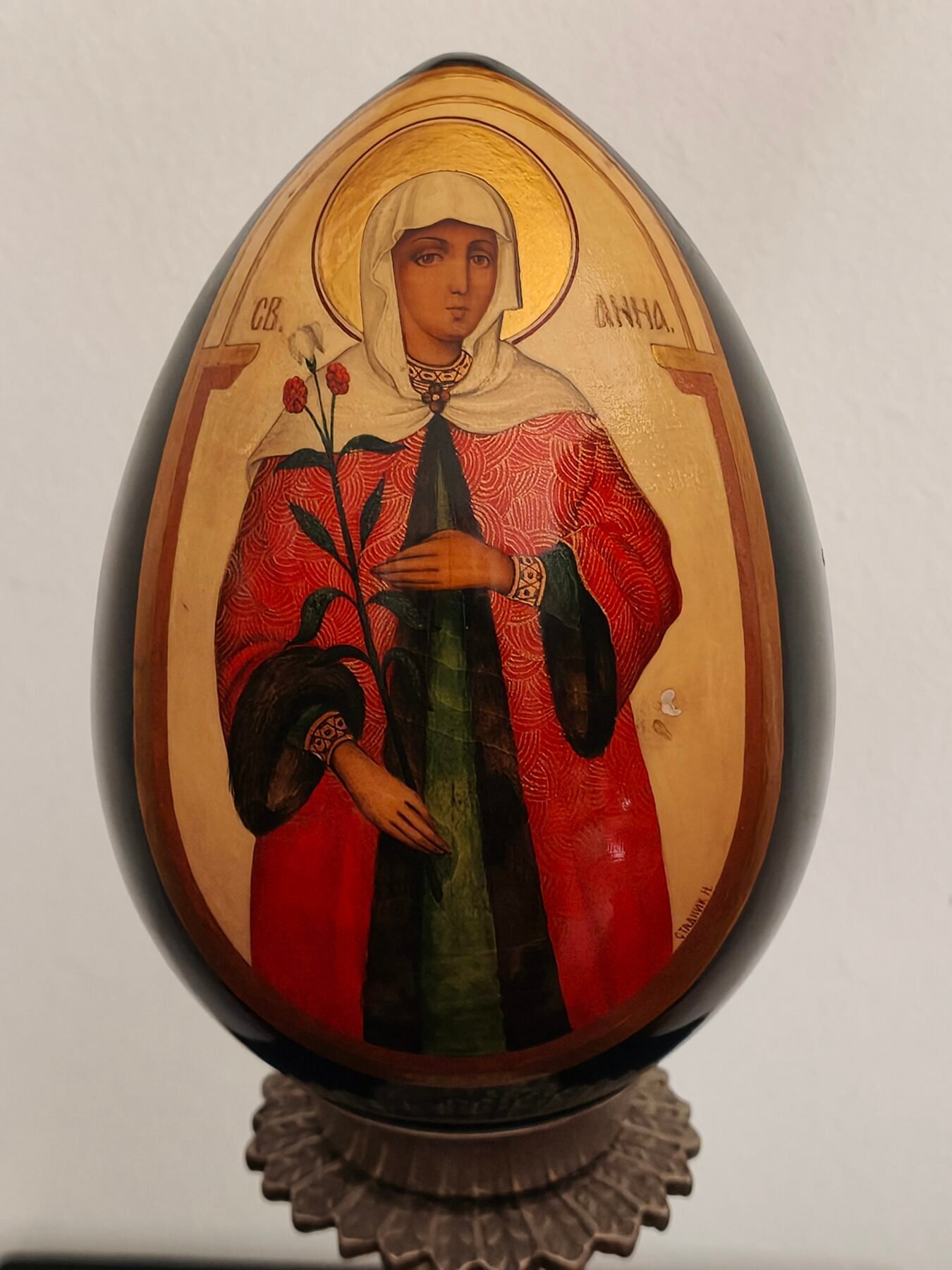
Pieces related to the same artist.