Neo-Renaissance ewer
5.000 €
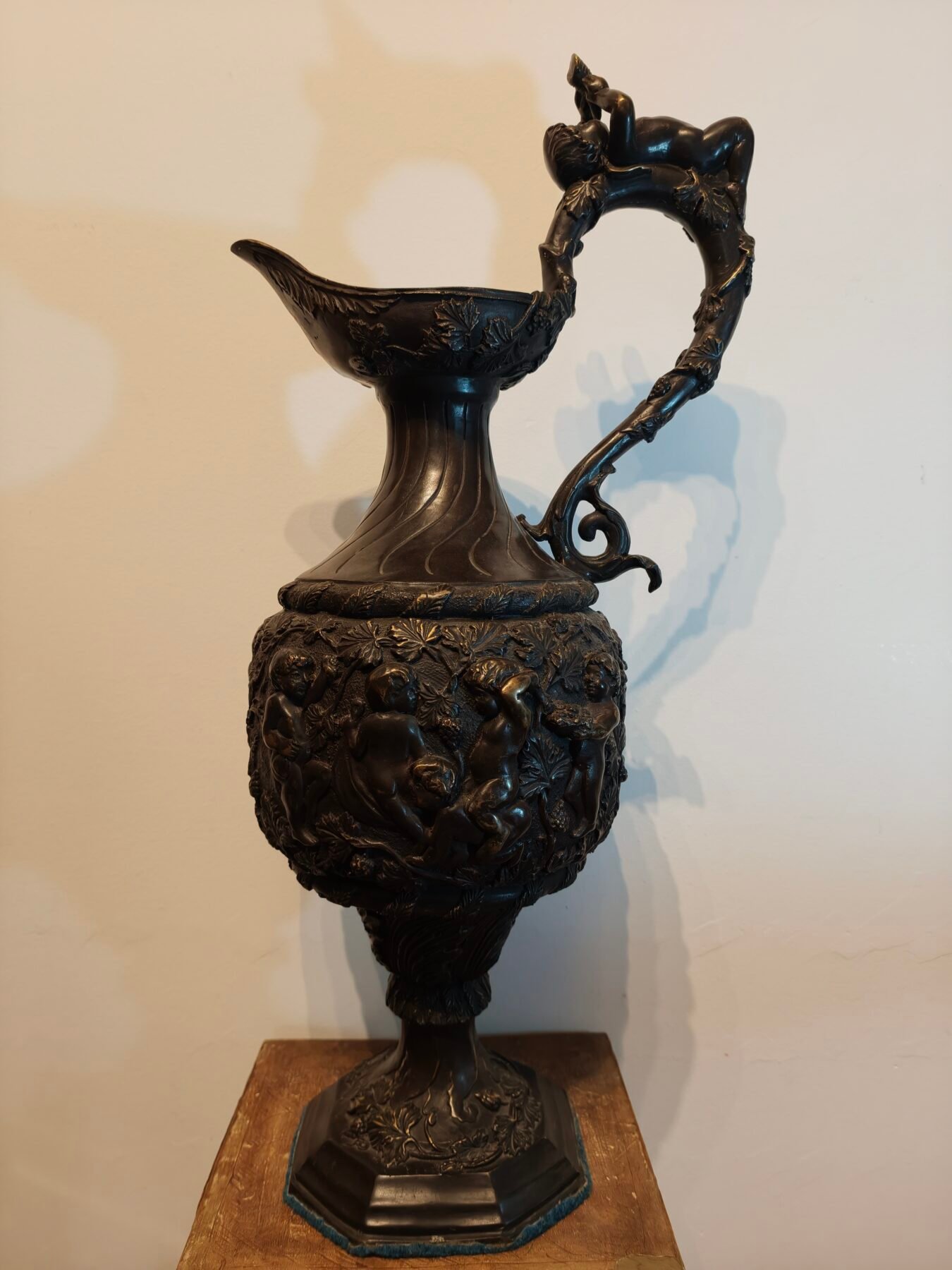
This extraordinary, imposing, and monumental large-format ewer or water pitcher, reaching a formidable 74 centimeters in height and standing out for its remarkable weight and structural solidity, fully responds to the aesthetic of 19th-century European historicist eclecticism, framing itself within the Neo-Renaissance and Mannerist taste that virtuously reinterpreted the great goldsmithing and casting models of the 16th and 17th centuries inspired by masters such as Benvenuto Cellini, typologically constituting an ostentatious ewer —a piece of apparatus originally conceived in Renaissance courts for the high aristocracy's table service, used alongside a matching basin for diners to wash their hands with scented water before and after banquets, although in this case it is a magnificent 19th-century recreation intended for cabinet collecting and the decoration of palaces or grand bourgeois salons—, regarding its materiality, the specific weight, density, thickness of the casting walls, and quality of the incisions confirm beyond a doubt that it is made of authentic solid bronze with a dark patina and subtle gilded highlights from friction, granting it exceptional durability and museum presence, while its rich Bacchic and mythological iconography is articulated through an extraordinarily dynamic central high-relief frieze where putti or infant amorini parade amidst the grape harvest, linked by vine shoots, leaves, and grape clusters symbolizing abundance, wine, and Dionysian celebration, and the sculpted handle is masterfully conceived as an infant anatomical body integrated into the foliage that appears to climb or hold onto the structure, topped by a putto playing with a shell or marine mask, combining vegetative elements, diagonal fluting on the neck, and a bulging body over a polygonal base that denotes outstanding artisanal mastery and extremely high decorative and collector value within period sumptuary arts.
TechniqueFundición en bronce a la cera perdida
Dimensions74cm
YearCirca 1870
ArtistTaller francés de fundición artística (c. 1870)
Taller francés de fundición artística (c. 1870)
Recommended works
Other selected pieces from the Art Andorra catalogue.