Mother Nature
8.500 €
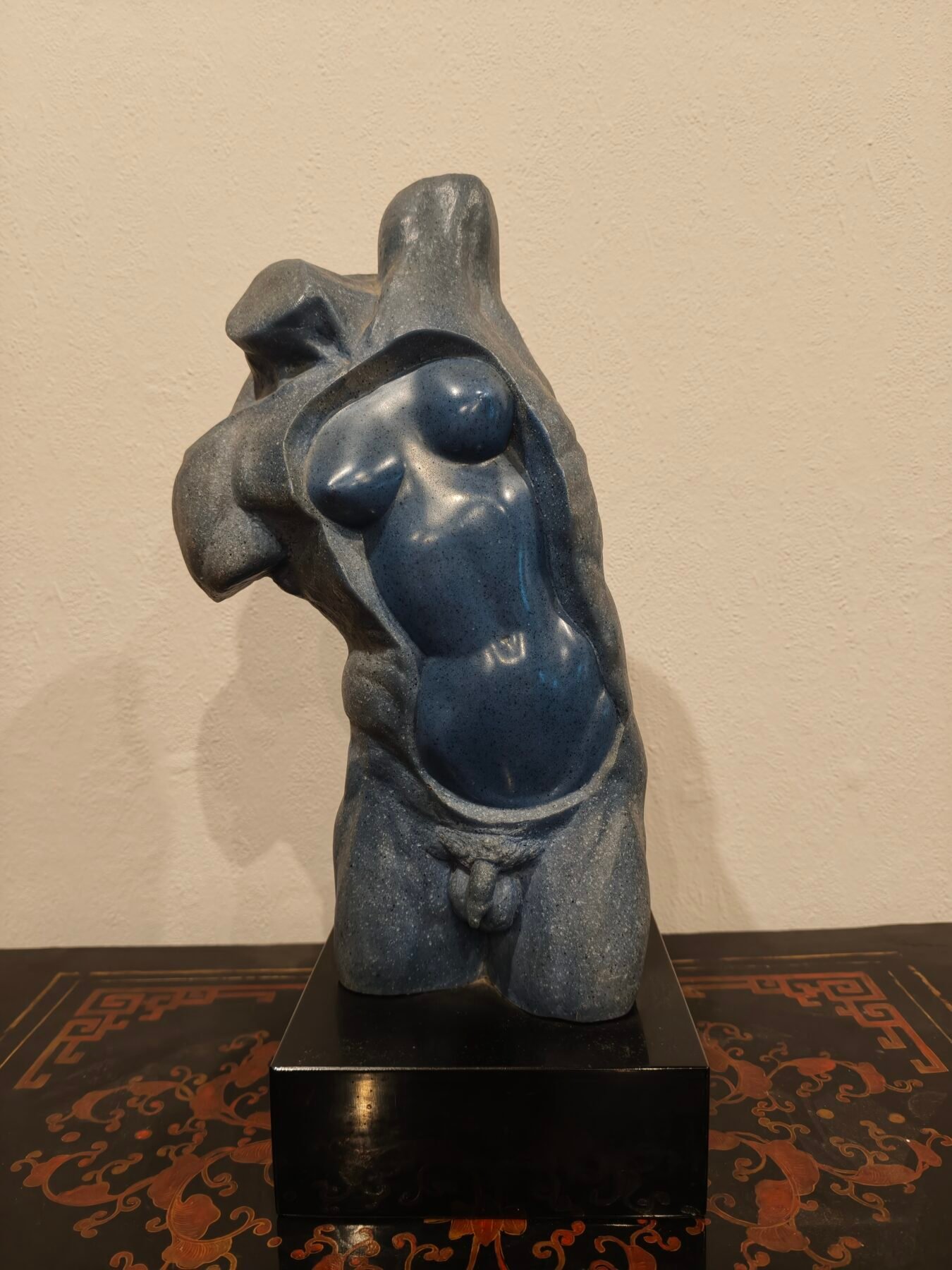
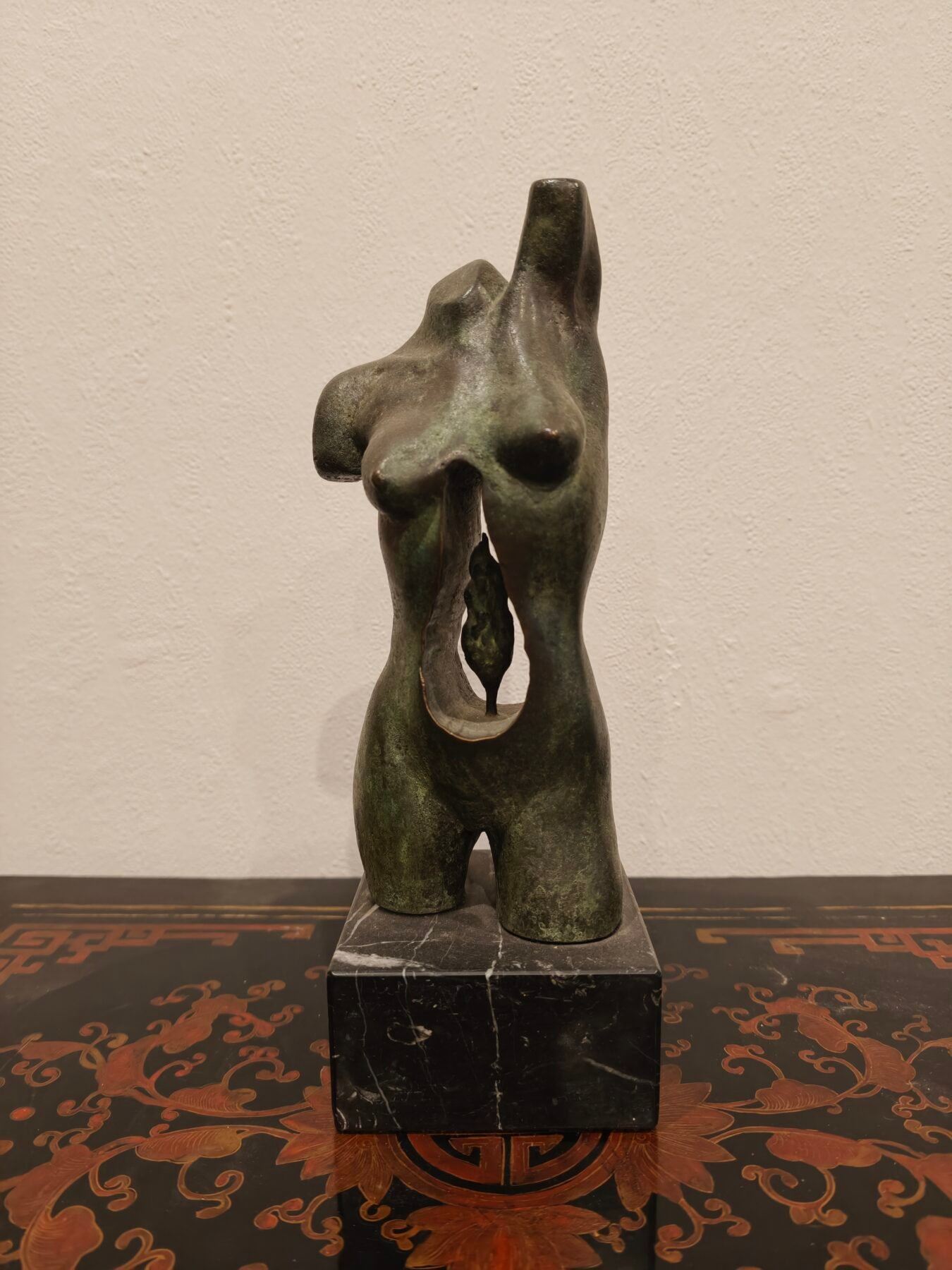
The sculpture titled "Madre Naturaleza" (Mother Nature), conceived in 1997 by the internationally acclaimed sculptor Lorenzo Quinn (Rome, 1966) and molded at the foundry in Valls (Tarragona, Spain), constitutes an exceptional piece of solid lost-wax cast bronze with an antique green oxide patina set upon a prismatic black veined marble base, standing at a total height of 30 cm and corresponding to edition 6/25 of an ultra-limited run of just 25 units plus 5 artist's proofs; the work delves into the artist's mature plastic language, characterized by an anatomical synthesis of neo-figurative and organic-symbolic affiliation where the human figure —in this case a stylized female torso featuring a central hollow that shelters and protects a developing tree— enters into direct dialogue with nature, fertility, and the genesis of life, bearing clear stylistic influences from the biomorphic language of Henry Moore, the stylized elegance of Jean Arp, and the conceptual strength of the classical figurative expressionism of Auguste Rodin and Michelangelo; through an impeccable technique of modeling, casting, and hand-finished fire patina, this work reflects the sustainable and humanistic vision that has driven Quinn to erect celebrated public monuments in world-class spaces and institutions such as the Vatican, the United Nations Headquarters, the Boboli Gardens in Florence, the Venice Biennale, and institutions including the Sochi Museum of Contemporary Art and the Saint Petersburg Sculpture Museum, positioning this piece as a sculptural landmark of high collectible and historical value within the artist's catalogue raisonné.
TechniqueFundición en bronce a la cera perdida
Dimensions30cm
Year1997
ArtistQUINN, Lorenzo
QUINN, Lorenzo
Lorenzo Quinn (born May 7, 1966, in Rome, Italy) is a renowned and internationally acclaimed Italian-American figurative sculptor, son of the celebrated Oscar-winning actor Anthony Quinn and Jolanda Addolori, whose childhood and youth were spent between Italy and the United States in a deeply artistic and interdisciplinary environment that influenced his early plastic vocation, receiving formal training from the age of twenty-one at the prestigious Academy of Fine Arts in New York —supplementing his studies at the Art Students League— where he deepened his knowledge of anatomical drawing, clay modeling, and classical figurative techniques, drawing direct inspiration from the monumental and introspective mastery of Auguste Rodin, Michelangelo Buonarroti, Gian Lorenzo Bernini, Constantin Brâncuși, and classical expressionism, as well as the direct influence and creative advice of his own father, rapidly evolving from painting to sculpture in bronze, stone, and agglomerated resins due to their greater capacity to express three-dimensional volume, human emotions, empathy, and collective connection; over more than three decades of professional career, Quinn's style has been distinguished by exceptional technical skill in anatomical representation —particularly in the recurring and symbolic use of human hands as transmitters of affection, creation, balance, and environmental responsibility—, articulating a conceptual body of work focused on spirituality, love, existential balance, climate change, and peaceful coexistence, a artistic language that has led him to erect majestic public installations and monumental works worldwide, highlighting milestones such as "Support" (presented at the 2017 Venice Biennale to raise awareness about global warming), "Building Bridges" (Venice, 2019), "Give" (Piazza del Comunitano in Pietrasanta and the Boboli Gardens in Florence), "The Force of Nature" (installed in iconic locations such as London, Shanghai, New York, Doha, and Singapore), "Together" (exhibited in front of the Pyramids of Giza in Egypt), "Dangerous Game" (at the Sochi Museum of Modern Art), and "Tree of Life" (commissioned to commemorate historical events); Lorenzo Quinn's work enjoys strong institutional recognition and a prominent presence in public collections, museums, foundations, and landmark spaces globally, featuring in the collection of the Vatican State (with an official commission for the Jubilee Year 2000), the United Nations Fund, the Cultural Crossroads Museum in Doha (Qatar), the City Hall of Palma de Mallorca, the Park Hyatt Foundation, the Saint Petersburg Sculpture Museum, the royal collections of the Middle East, and the Sochi Museum of Contemporary Art, in addition to multiple sculpture parks and private corporate and institutional collections across the United Kingdom, the United States, Spain, Italy, China, and the United Arab Emirates.
Works
More works by this artist
Pieces related to the same artist.