
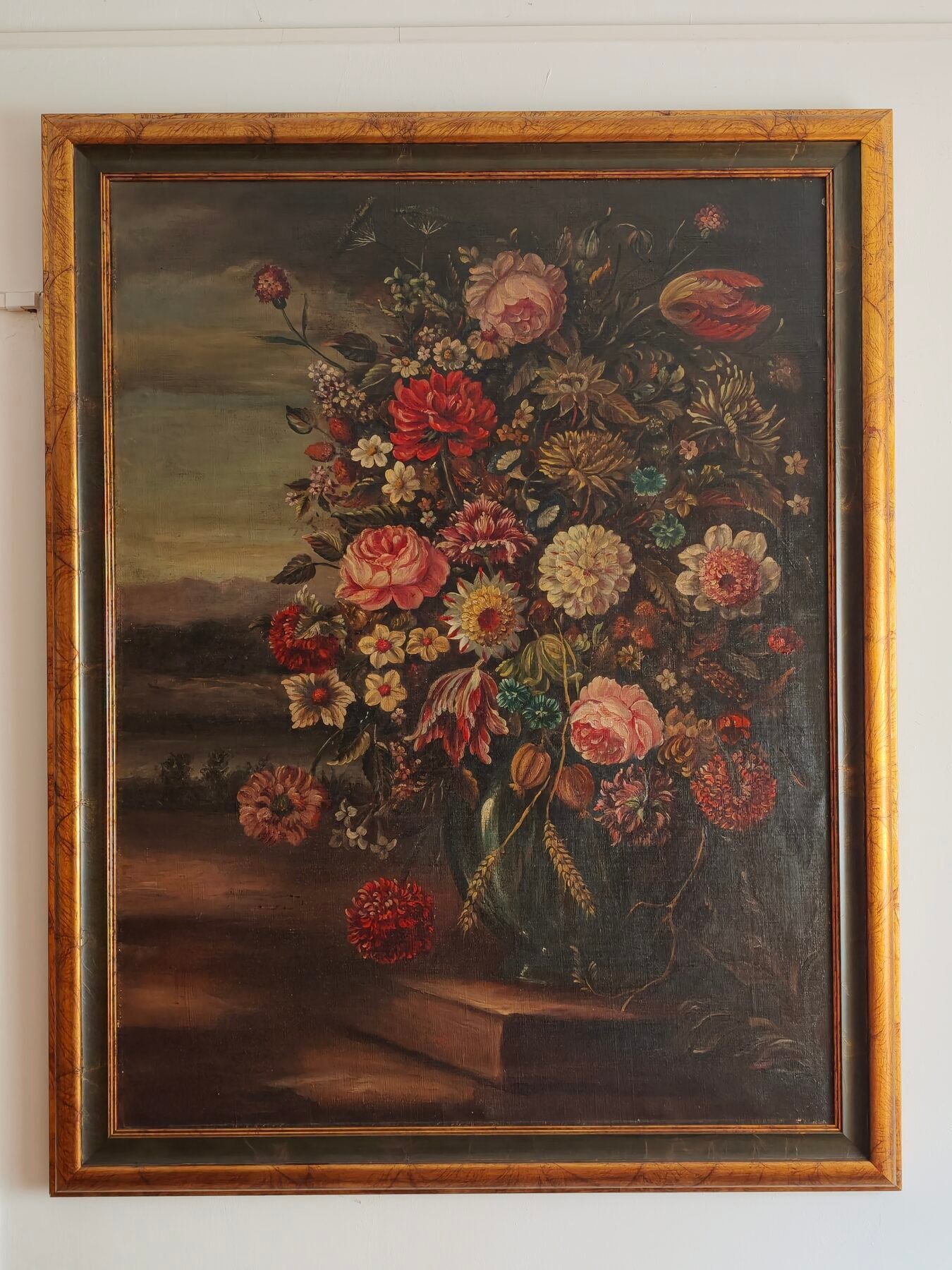
Flower vase and landscape
18.000 €
This monumental floral still life, executed around 1680–1690 on an imposing 125 x 99 cm canvas and attributed with solid scholarly backing to the distinguished master of the Madrid Baroque, Gabriel de la Corte (c. 1648–1694), stands as a work of unsurpassable aesthetic, historiographical, and patrimonial value that masterfully synthesizes the heights achieved by floral still life painting during the Spanish Golden Age. From a purely technical and stylistic standpoint, the composition excels through its dazzling executive freshness and the fluidity of a vibrant, nervous, and juicy brushwork applying dense pigment impastos to endow each botanical species —from the twisted petals of flamed tulips to fleshy roses and fringed carnations— with astonishing tactile relief and corporeality, dramatically emerging through highlights of white light upon a glass vase. Unlike the more rigid or stereotyped productions of his contemporaries, the piece demonstrates a clear assimilation of Flemish gestural freedom and Italian Baroque spatial rhythm, boldly breaking away from traditional neutral backgrounds through a side opening onto a twilight sky that infuses the arrangement with an atmospheric breath, spatial depth, and unmistakable poetic sophistication. However, the supreme draw of this canvas and the decisive factor exponentially elevating its valuation in the international market lies in its extraordinary provenance and documentary traceability, impeccably preserving on its verso the official label of the Junta Delegada de Incautación, Protección y Salvamento del Tesoro Artístico under inventory number 15664 and CNT control mark 2365, irrefutable evidence of its role in the heritage protection efforts during the Spanish Civil War, a period when it was temporarily safeguarded within the galleries of the Museo del Prado as part of the works selected for their exceptional technical quality to protect them from conflict prior to their eventual return, an institutional provenance and living history that substantially enhances its valuation, placing it at the pinnacle of the high-end market and establishing it as a true museum-grade masterpiece for any prestigious public or private collection.
TechniqueOil sobre tela
Dimensions125x99cm
YearCirca 1680-1690
ArtistCORTE, Gabriel de la
CORTE, Gabriel de la
Gabriel de la Corte (Madrid, c. 1648 – 1694) constitutes one of the most fascinating, singular, and technically virtuous personalities within the panorama of floral still life painting of the Golden Age Madrid School. Son of the painter Xavier de la Corte and grandson of Juan de la Corte, a distinguished battle painter of Flemish origin settled at the Habsburg court, Gabriel grew up within a family lineage imbued with artistic dynamism and plastic rigor, inclining from a very young age exclusively and almost obsessively toward the painting of flower vases and garlands—a genre in full commercial expansion among the high aristocracy and Madrid bourgeoisie during the final third of the 17th century. On a stylistic level, De la Corte forged a uniquely independent poetic language, characterized by a marked influence of Italian and Flemish Baroque, which he assimilated with notable insight through the flourishing art collections of the Spanish court. His pictoric catalogue set itself apart from the more restrained symmetry of his Spanish predecessors by introducing an innovative gestural fluidity, where the paint material acquires a tactile relief and an extraordinary liveliness through a dense, juicy impasto and a nervous brushstroke that models roses, flamed tulips, carnations, and exotic species with vibrant touches of direct light. One of his most celebrated and unmistakable contributions to the Spanish still life of the period was the bold departure from the traditional neutral background in favor of a lateral opening toward twilight skies, leaden clouds, and gentle distant mountain contours—a highly sophisticated Hispano-Italian compositional device that endowed his floral arrangements with atmospheric breath, a sense of spatial depth, and a prized monumentality. Despite the talent exhibited in his compositions and the constant flow of private commissions that earned him well-deserved renown in artistic circles, his oeuvre today forms part of the world's most prestigious museum institutions—led by the Museo Nacional del Prado—and top-tier international private collections, solidifying his indisputable status as one of the great geniuses and leading exponents of Spanish Baroque flower painting.
Recommended works
Other selected pieces from the Art Andorra catalogue.
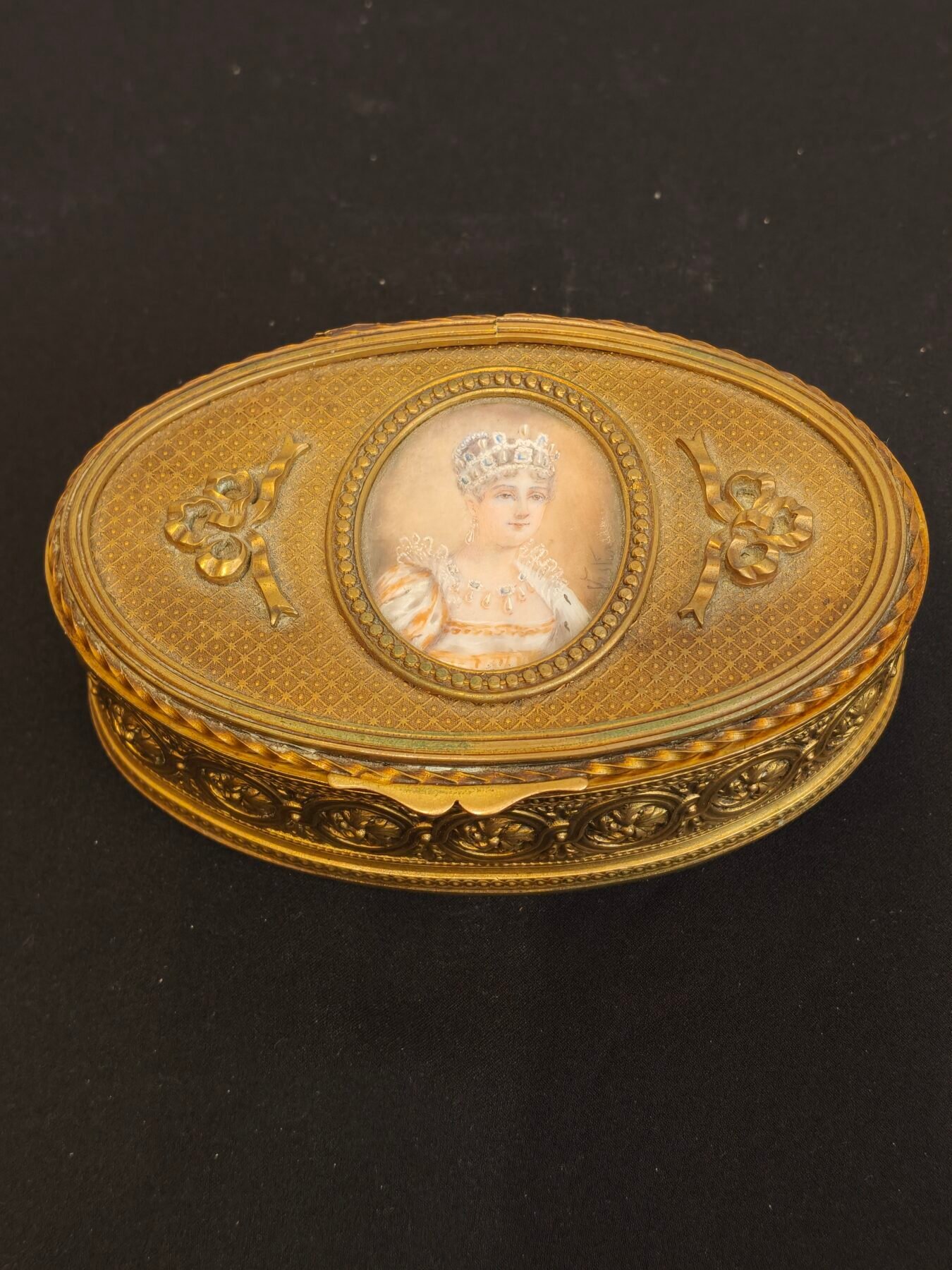
VESTIER, AntoineAntiques
Second Empire Jewelry Box with Miniature of Empress Joséphine
500 €Open profile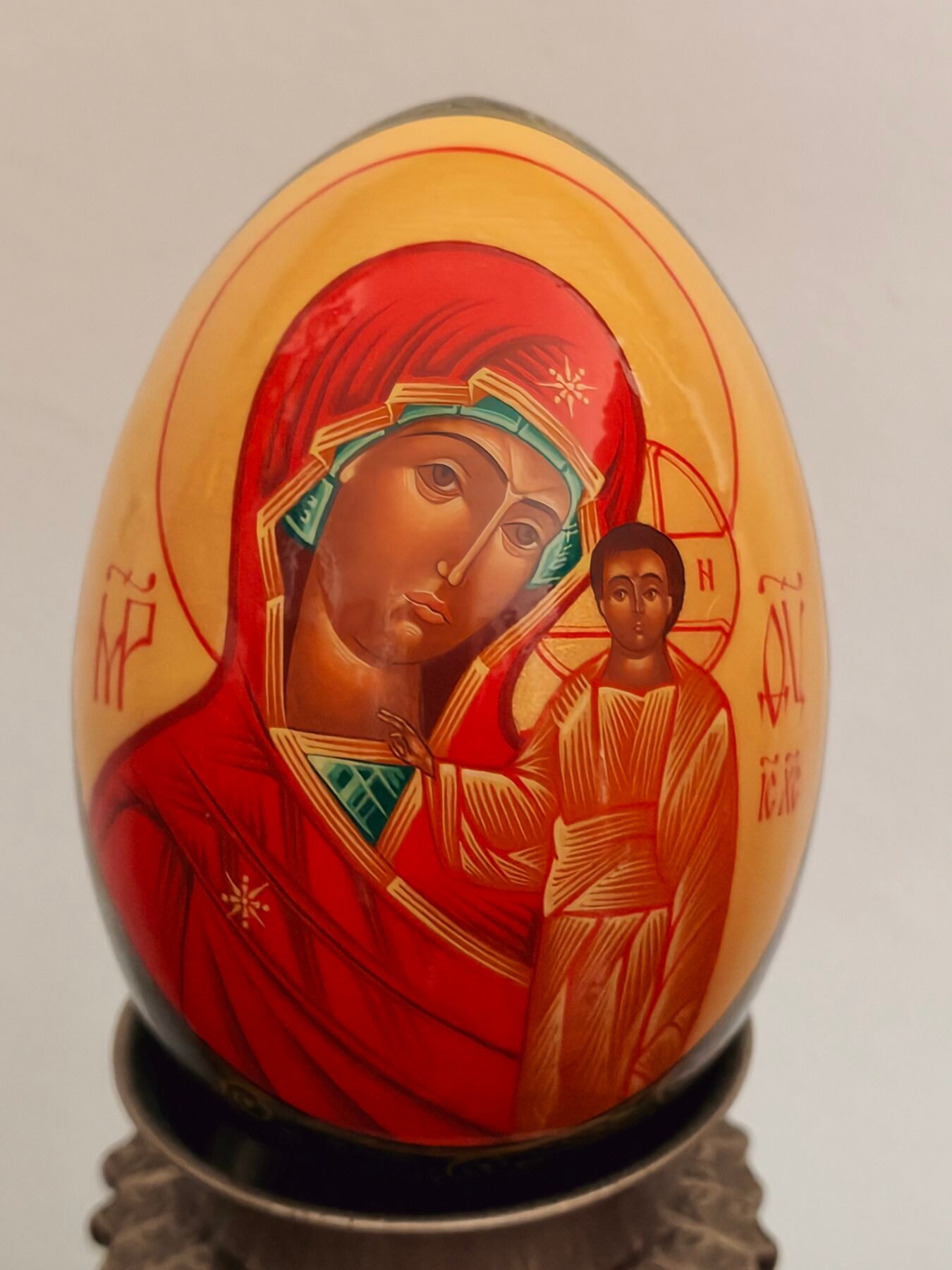
VLADÍMIR, Escuela deReligious art
Russian Lacquered Wooden Easter Egg "Our Lady of Kazan" Signed
250 €Open profile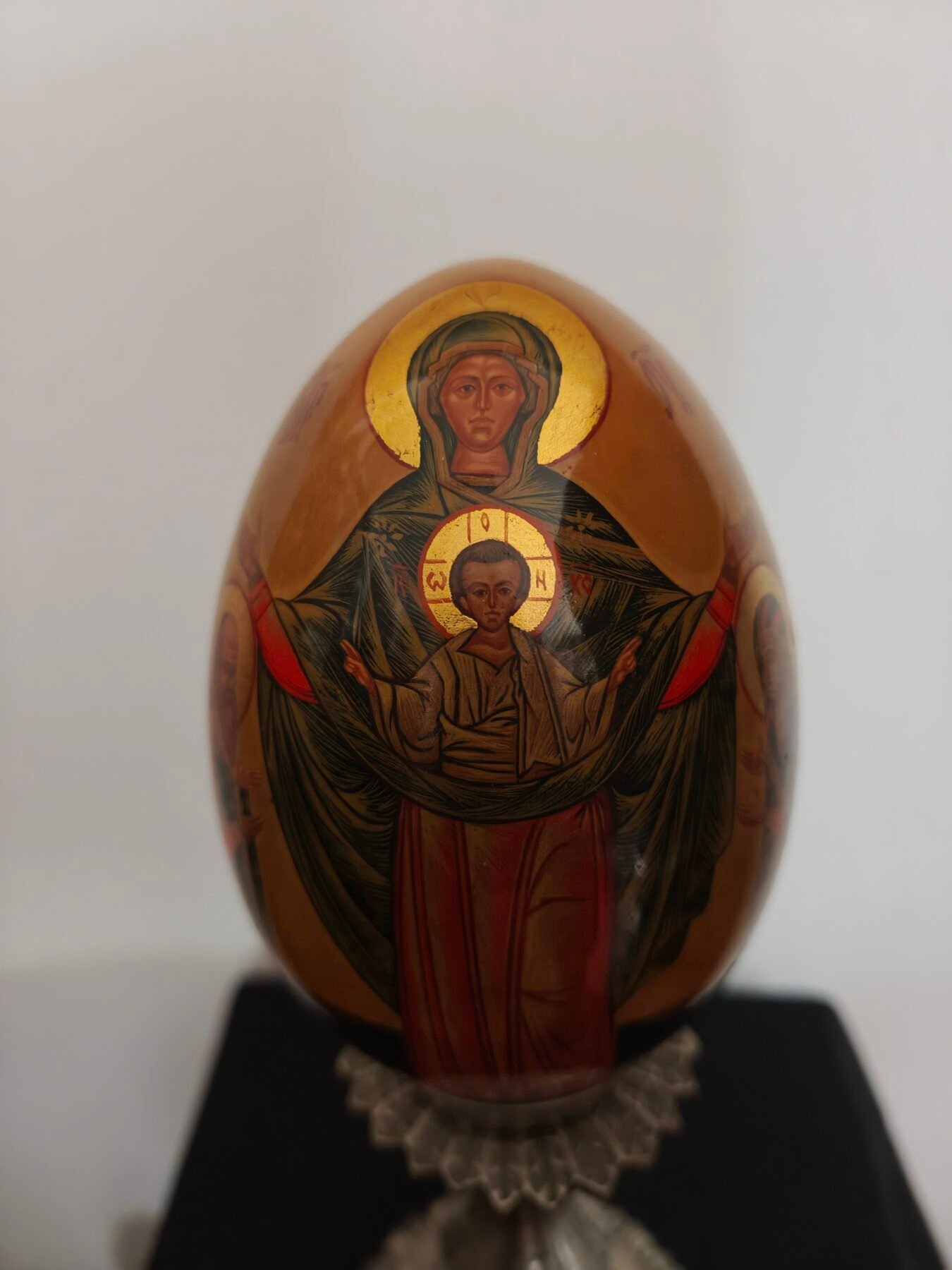
ABRÁMTSEVO, Escuela deReligious art
Russian Lacquered Wooden Easter Egg "Our Lady of the Sign" Signed
350 €Open profile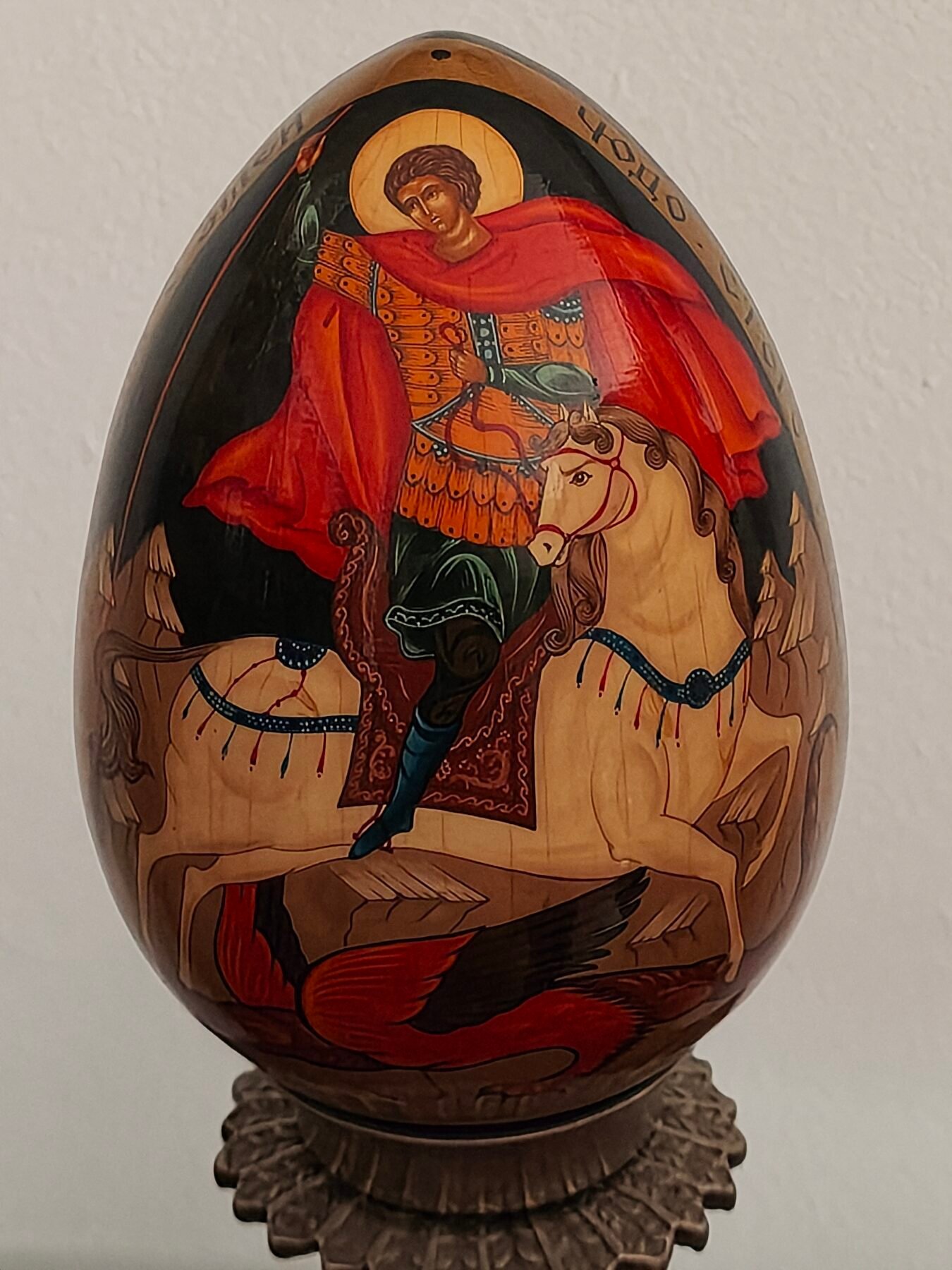
PALEJ, Escuela deReligious art
Russian Lacquered Wooden Easter Egg Depicting Saint George and the Dragon Monogrammed
250 €Open profile
PALEJ, Escuela deReligious art