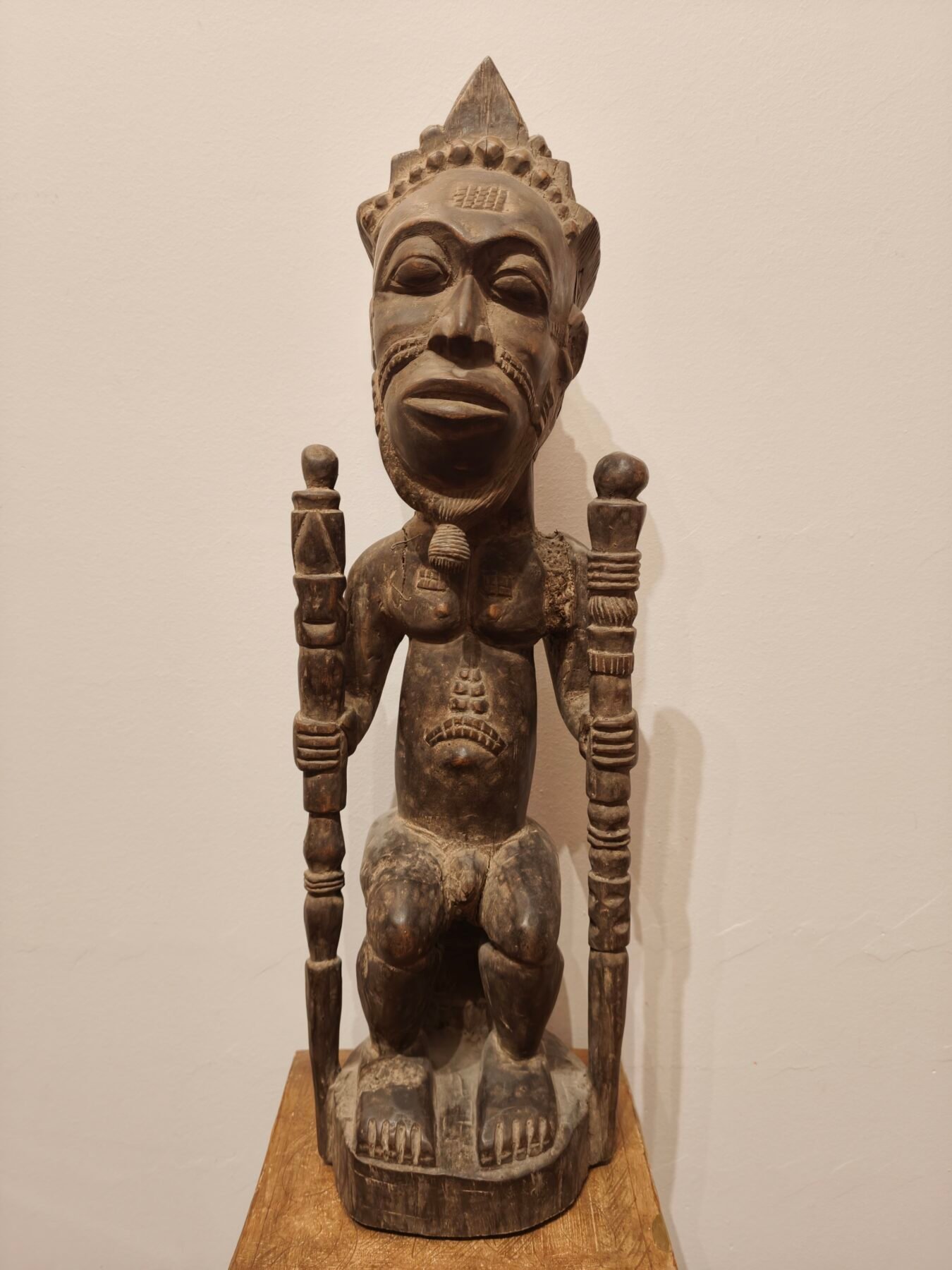
Ceremonial figure of a seated dignitary (Fumu)
2.500 €
This monumental freestanding wooden sculpture measuring 67 centimeters in height constitutes a statuary representation of an ancestral dignitary crafted around the mid-20th century (c. 1950) by the Songye ethnocultural group, an influential society of the Bantu linguistic complex settled in the Greater Kasai and Katanga regions of the Democratic Republic of the Congo. The work belongs to the typological category of royal or ruling prestige figures (Fumu), characterized by depicting the leader in a seated position upon a ritual caryatid stool while flanking his body holding two turned monoxylous scepters or batons of command, unmistakable attributes of executive authority, sacred justice, and territorial jurisdiction. Exhibiting a craftsmanship that merges geometric abstraction with anatomical rigor, the Songye artist structured the piece through an iconography saturated with codes of status and spiritual protection: noteworthy is the prominent sagittal crest incised with triangular motifs crowning the head, which alludes to feline strength and connection with celestial realms, alongside the intricate striated beard (luzelu) suspended from the chin, a distinction reserved for the elders of the council of notables and guardians of ancestral law. The body surface reveals a complex program of raised ritual scarifications, visible across the torso, back, and surrounding the umbilical cavity (munda), which not only signify membership in an aristocratic lineage and initiatory achievement, but also serve as symbolic receptacles or shields designed to neutralize forces of witchcraft (masende). The dark, dry, organic-use patina, together with the natural seasoning cracks of the monoxylous wood, attests to the formal authenticity and community-ritual function of the piece within the traditional statuary tradition of Central Congo. The commanding physical presence, the exceptional scale exceeding sixty centimeters, and the supreme level of technical definition in the body incisions and seated anatomy establish this work as a masterpiece of extraordinary historical and artistic value within the international tribal art market and specialized collecting circuit.
TechniqueTalla monóxila en madera con pátina de uso e incisiones rituales
Dimensions67cm
YearCirca 1950
ArtistSONGYE, Etnia
SONGYE, Etnia
The Songye people constitute one of the most prominent and sophisticated ethnolinguistic and artistic groups of the Bantu linguistic complex in Central Africa, historically settled in the fertile basins of the Sankuru and Lomami rivers within the present-day Greater Kasai region and Katanga province in the Democratic Republic of the Congo. Politically organized into traditional chiefdoms governed by the sacred figure of the ruler or supreme chief (Fumu), the Songye developed a complex social system since the 16th century supported by male secret societies, most notably the influential Bwadi bwa Kishi confraternity. In the fields of tribal art history and cultural anthropology, Songye sculptural production is internationally recognized for its extraordinary expressive power, characterized by a formal language that synthesizes monumental geometric abstraction with rigorous anatomical tension. Master carvers of this tradition did not conceive sculpture as a purely contemplative object, but rather as a sacred channel of spiritual mediation, structuring their statuary around renowned prestige figures and ruling ancestors, as well as imposing Kifwebe masks, which are distinguished by geometric incisions, sagittal crests, and body scarifications (munda) that encode aristocratic status, initiatory rank, and protection against adverse forces. Today, traditional Songye creations occupy a paramount position within the collections of the world's most prestigious museum and international institutions—such as the Musée du Quai Branly in Paris, the Royal Museum for Central Africa in Tervuren, or the Metropolitan Museum of Art in New York—and are valued by collectors and art historians as one of the pinnacle achievements of traditional African statuary.
Recommended works
Other selected pieces from the Art Andorra catalogue.